
How a Car Battery Actually Works and When It's Time to Replace It
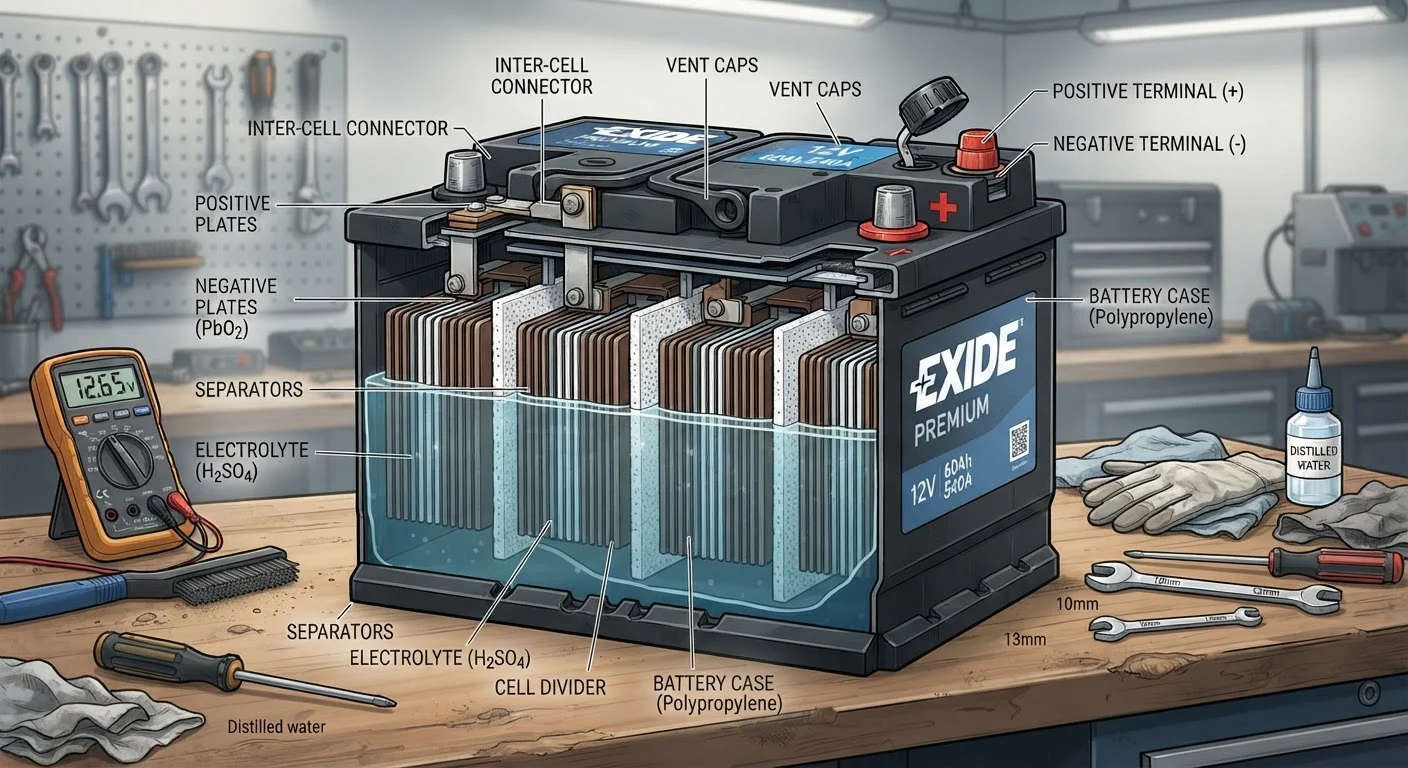
Photo credit: ExplorerGrid.com | Endless Grid Of Factual Content
In this article
Understand how your battery stores and delivers power, what shortens its lifespan, and the signs that a replacement is overdue.
Key Takeaways
- A car battery stores energy chemically and releases it electrically — the alternator keeps it recharged while you drive.
- Most batteries last 3 to 5 years, though heat, short trips, and electrical drain can shorten that window.
- Slow cranking, dimming lights, and a swollen case are reliable early warning signs of a failing battery.
- Extreme temperatures — both hot and cold — are the leading causes of premature battery failure.
- A battery load test at a shop or auto parts store is the most accurate way to assess remaining capacity.
The Chemistry Behind Starting Your Engine
Every time you turn the key or press the start button, your battery does something remarkable in a fraction of a second: it converts stored chemical energy into electrical current powerful enough to spin the starter motor and fire the engine. Understanding that process explains a lot about why batteries fail when they do.
A standard 12-volt lead-acid battery contains six cells, each holding a set of lead dioxide (positive) and sponge lead (negative) plates submerged in a diluted sulfuric acid solution called electrolyte. When the circuit closes, a chemical reaction between the plates and the acid releases electrons — that electron flow is the electrical current your car's systems consume.
While the engine runs, the alternator acts as a generator, pushing current back into the battery to reverse the reaction and restore charge. The battery and alternator work as a team: the battery handles instantaneous high-demand moments (starting, power surges), and the alternator handles sustained supply and recharging.
“The battery is the heart of the electrical system — every other component depends on it delivering clean, stable power on demand. Most failures are predictable if drivers pay attention to the early signs.”
— Automotive Engineering Editorial Team, Vehicle Systems Analysis, SAE International Publications
What Actually Shortens Battery Life
Heat is the single biggest enemy of battery longevity — not cold, as many drivers assume. High temperatures accelerate the corrosion of internal plates and cause electrolyte to evaporate, permanently reducing capacity. Batteries in hot-climate states often fail closer to the three-year mark for this reason.
Short trips are the second major culprit. If your typical drive is under 20 minutes, the alternator may never fully recharge what the battery used to start the engine. Over weeks and months, the battery slowly discharges deeper and deeper, a process called sulfation — sulfate crystals form on the plates and reduce their active surface area.
Parasitic drain — small but continuous draws from clocks, alarms, and onboard computers — also chips away at charge when the vehicle sits unused for days at a time. Leaving headlights or accessories on is an obvious acute drain, but modern vehicles draw some current even with everything switched off.
3–5 years
Typical car battery lifespan
Industry consensus from battery manufacturers and automotive service associations places average lead-acid battery life in this range under normal US driving conditions.
~40%
Reduction in battery capacity in extreme cold
According to battery testing research, a lead-acid battery can lose up to 40% of its cranking power at 0°F compared to its rated performance at 80°F.
12.6V
Resting voltage of a fully charged battery
A reading below 12.4 volts at rest suggests a partially discharged battery; below 12.0 volts indicates significant discharge and potential sulfation damage.
For a broader view of how battery upkeep fits into overall vehicle costs, see our guide to managing maintenance costs over a vehicle's lifetime.
Recognising the Warning Signs
Batteries rarely fail without warning — the signals are just easy to dismiss until the car won't start. Knowing what to look for gives you time to address the issue on your schedule rather than a parking lot's.
- Slow or labored cranking: If the engine turns over noticeably slower than usual, especially on warm days, the battery is struggling to deliver current under load.
- Dimming headlights at idle: Lights that brighten when you rev the engine suggest the battery isn't holding charge and the alternator is compensating.
- Frequent need for jump-starts: Needing a jump more than once in a short period is a clear sign the battery can no longer hold a usable charge.
- Swollen or bloated case: Excessive heat causes the battery case to bulge. A swollen battery should be replaced promptly — it can leak corrosive acid.
- Battery warning light: The dashboard battery icon indicates the charging system isn't performing correctly. See our guide to dashboard warning lights for what that symbol specifically signals.
Cold weather amplifies every one of these symptoms — a battery that functions marginally in October may refuse to start a car in January. Our seasonal maintenance guide covers when to schedule a pre-winter battery check.
When and How to Get a Battery Replaced
A battery approaching or past four years old warrants a load test even if it hasn't shown symptoms. A load test applies a controlled electrical demand and measures how well the battery sustains voltage — it reveals degradation that a simple voltage reading misses. Most auto parts stores offer this at no charge.
When replacement is due, the battery's group size (a standardised physical dimension and terminal arrangement) must match your vehicle's specification. Your owner's manual will list the correct group size and cold cranking amp (CCA) rating — the minimum current the battery must deliver at 0°F to start the engine reliably.
AGM batteries are required in vehicles with stop-start systems and should not be substituted with conventional flooded batteries, as the charging profiles differ. Installing the wrong type can shorten the new battery's life significantly.
Schedule a Load Test Before Winter
The best time to test a battery older than three years is in the fall, before cold weather stresses the system. A load test takes about five minutes and can prevent an unexpected no-start situation in the middle of winter. Many auto parts retailers offer this service at no charge.
Dispose of old batteries through a retailer, auto parts store, or municipal recycling program — lead-acid batteries are regulated hazardous waste and should never go in household trash. Most retailers accept cores at no cost when you purchase a replacement.
Frequently Asked Questions

Author
Automotive Editorial Team
Automotive Editorial Team is the collective byline for our editorial team and contributor network. Articles published under this byline or an editorial pen name are researched, written, and reviewed according to our editorial standards for clarity, consistency, and independence before publication.
View all articles →