
Electric Vehicle Ownership Costs vs. Gas-Powered Cars
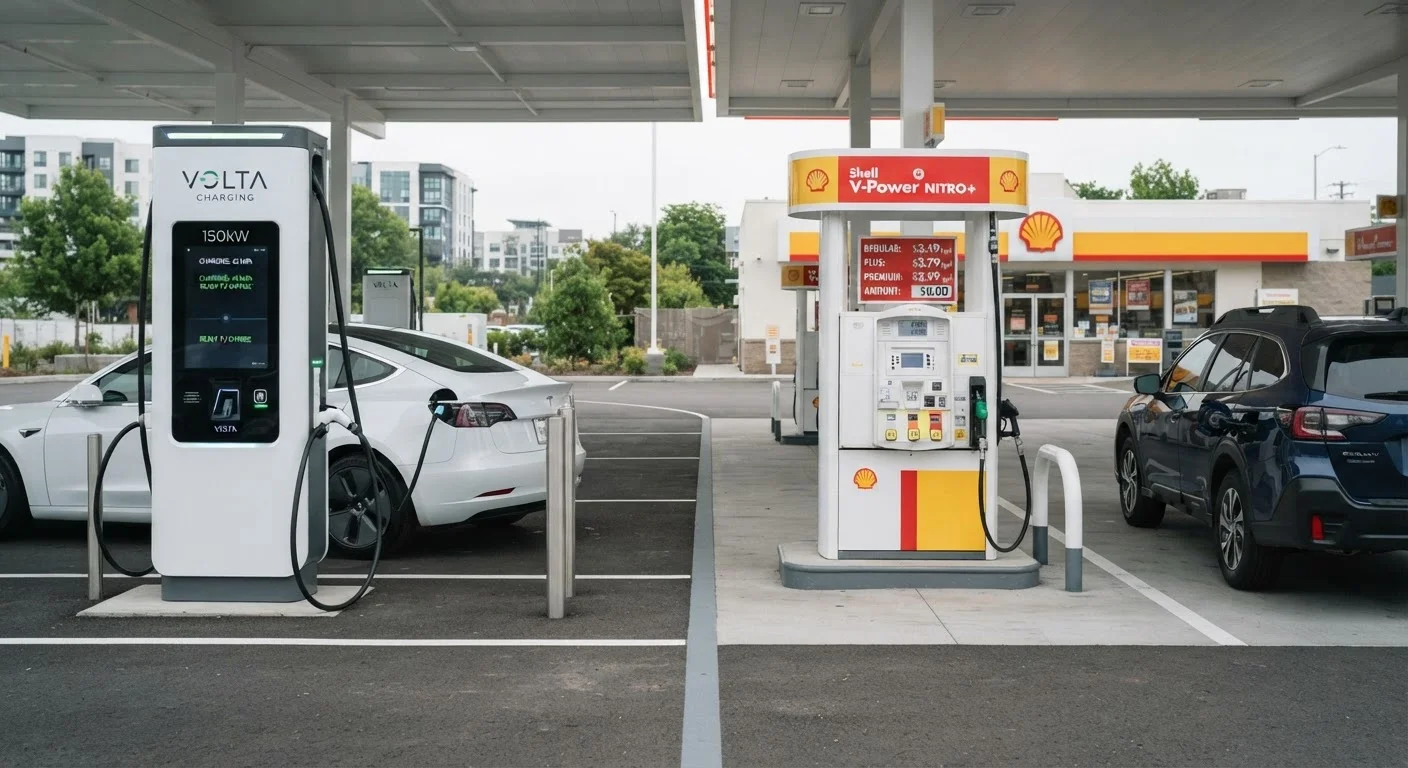
Photo credit: ExplorerGrid.com | Endless Grid Of Factual Content
In this article
Higher purchase prices, lower fuel costs, fewer oil changes—how EV and gas vehicle total costs of ownership compare across key categories.
Key Takeaways
- EVs typically cost more upfront but offset that with significantly lower fuel and maintenance expenses over time.
- Federal tax credits and state incentives can meaningfully reduce the purchase price gap for eligible EV buyers.
- Home charging equipment adds an initial installation cost that gas-car owners don't face.
- Insurance costs for EVs often run higher than comparable gas vehicles, though the gap is narrowing.
- High-mileage drivers tend to reach the EV break-even point faster due to greater cumulative fuel savings.
Purchase Price and Incentives
The sticker price gap between EVs and equivalent gas vehicles remains the most immediate barrier for many buyers. New electric vehicles generally carry a purchase premium of roughly $10,000 to $15,000 over comparable gas-powered models, though that range varies widely by segment. A compact electric sedan competes differently against its gas counterpart than a full-size electric truck does.
Federal tax credits — currently up to $7,500 for qualifying new EVs under the Inflation Reduction Act — can substantially compress that gap, but eligibility depends on income limits, vehicle MSRP caps, and assembly location requirements. Many states layer additional incentives on top. It's worth researching current federal and state programs before assuming the sticker price reflects your actual out-of-pocket cost. For a broader look at what you're actually paying, see what car ownership actually costs over time.
Fuel and Energy Costs
This is where EVs build their strongest financial case. Charging an EV at home using average U.S. electricity rates typically costs the equivalent of $1.00–$1.50 per gallon of gasoline, depending on your local utility rates and how efficiently you charge. Drivers paying $3.50–$4.00 per gallon at the pump can expect to cut energy costs by 50–70% by switching to home charging.
Public fast-charging, however, is more expensive — sometimes approaching or even exceeding the per-mile cost of gas, particularly on premium DC fast-charging networks. If you rely heavily on public charging rather than a home setup, the fuel savings advantage shrinks considerably. Small MPG differences compound over time, and the same principle applies to electricity rates — your local energy cost matters more than national averages.
| Cost Category | Electric Vehicle | Gas-Powered Car | |
|---|---|---|---|
| Average Purchase Price Premium | Cost Category | $10,000–$15,000 higher (before incentives) | Lower baseline sticker price |
| Annual Fuel/Energy Cost | Fuel/Energy | ~$600–$1,200 (home charging) | ~$2,000–$3,500 (varies by MPG and gas price) |
| Routine Maintenance | Maintenance | No oil changes; fewer service items | Oil changes, filters, spark plugs, more |
| Insurance Cost | Insurance | Typically $300–$600/yr higher | Generally lower premiums |
| Home Setup Cost | Home Setup | $500–$1,500 (Level 2 charger install) | None required |
| Battery/Engine Longevity Risk | Major Component Risk | Battery replacement outside warranty costly | Engine/transmission repairs possible |
| Depreciation Trend | Depreciation | Improving; earlier models depreciated faster | More predictable and established |
Maintenance and Repair
EVs have fewer moving parts than internal combustion engines — no oil changes, no transmission fluid, no spark plugs, no timing belts. The U.S. Department of Energy has estimated that EV maintenance costs run roughly 40% lower than comparable gas vehicles over the vehicle's life. Brake wear is also reduced on EVs thanks to regenerative braking, which recaptures energy and lessens the load on friction brakes.
That said, EVs aren't maintenance-free. Tires, cabin air filters, wiper blades, and coolant for thermal management systems still require attention. Battery replacement — while increasingly rare within the first 100,000 miles due to improving warranties (typically 8 years/100,000 miles federally mandated) — remains a significant potential cost if needed outside warranty coverage. See recurring ownership costs and what each typically runs annually for a full reference list.
Insurance, Depreciation, and Home Charging Setup
EV insurance premiums currently average higher than gas vehicles — often by $300–$600 per year — due to higher repair costs and specialized parts. That gap has been shrinking as insurers accumulate more claims data, but it's a real line item to budget for today.
Depreciation has historically hit EVs harder than gas vehicles, though this trend is shifting as EV adoption matures. Early EV models saw steep value drops; newer models are holding value better, particularly those with strong range and brand recognition.
Home charging equipment (a Level 2 charger) typically costs $500–$1,500 installed, depending on your home's electrical panel and the installer's rates. This is a one-time cost gas-car owners don't face, and it should be factored into any true cost comparison.
Get Personalized Insurance Quotes Early
Insurance costs for EVs vary more than most buyers expect. Before finalizing a vehicle decision, request quotes for the specific models you're considering — not just averages. Some EV models carry notably higher premiums than others in the same class, and knowing the actual number lets you build a more accurate total-cost comparison.
For perspective on how these costs stack up across different vehicle types, body style affects far more than cargo room — and the same applies to powertrain choice.
How to Calculate Your Personal Break-Even
The break-even point — when cumulative EV savings offset the higher purchase price — varies significantly by driver. A person driving 20,000 miles per year on a home charger might break even in four to six years. A driver logging 8,000 miles annually relying on public chargers may never fully close the gap within a typical ownership period.
Key variables to run through your own estimate: your annual mileage, local electricity and gas prices, applicable incentives, insurance quotes for specific models, and how long you plan to own the vehicle. Common beliefs about car costs often lead to bigger bills, and underestimating the EV purchase premium — or overestimating fuel savings — is one of the more common planning errors. Running honest numbers on your specific situation beats relying on generalized claims in either direction.

Author
Automotive Editorial Team
Automotive Editorial Team is the collective byline for our editorial team and contributor network. Articles published under this byline or an editorial pen name are researched, written, and reviewed according to our editorial standards for clarity, consistency, and independence before publication.
View all articles →