
Plants That Genuinely Deter Pests—and Those That Probably Don't
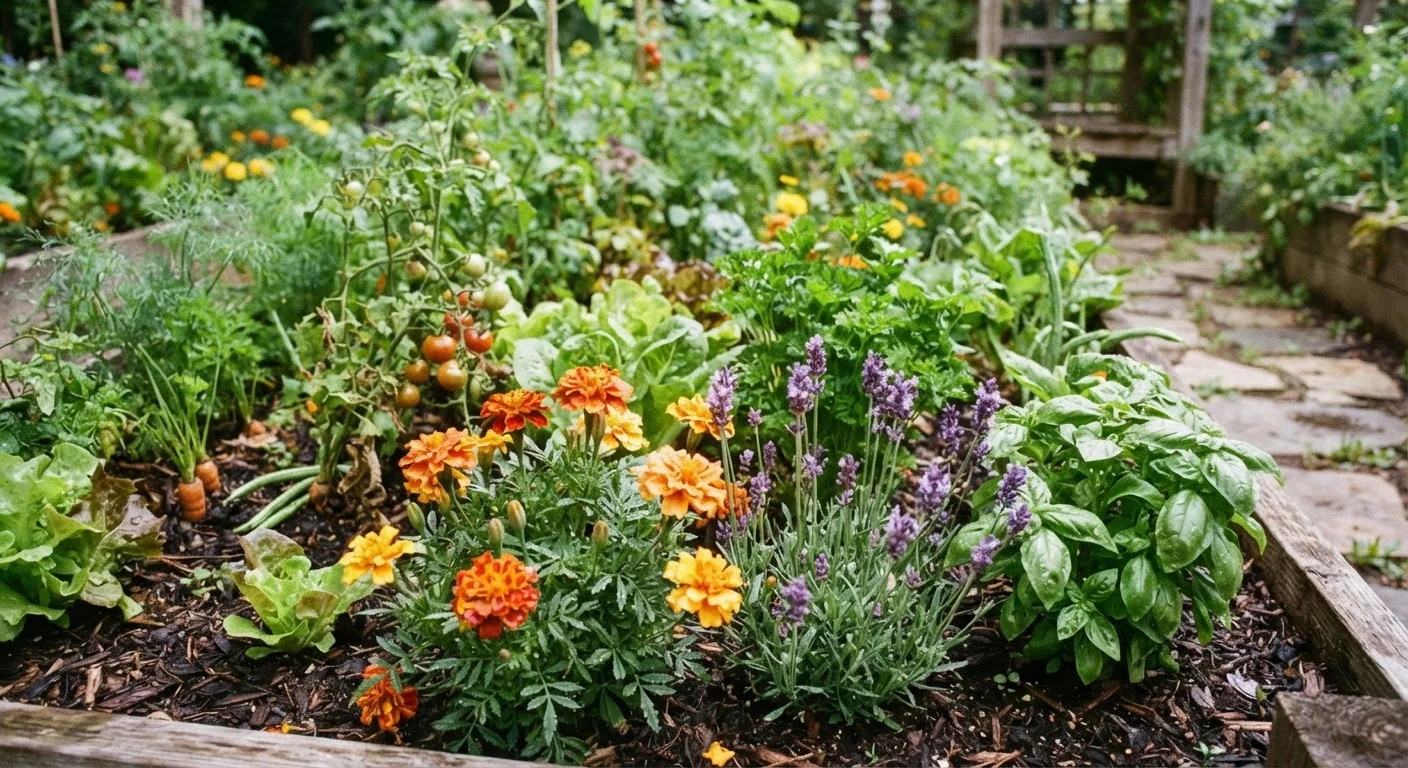
Photo credit: ExplorerGrid.com | Endless Grid Of Factual Content
In this article
Some plants do repel insects or nematodes; others are mostly garden lore. A grounded look at natural pest management through planting.
Key Takeaways
- A handful of plants — including marigolds and certain alliums — have genuine, research-supported pest-deterring properties.
- Many popular 'repellent' plants work only when processed into oils or sprays, not simply by growing nearby.
- Companion planting works best as one layer of an integrated pest management strategy, not a standalone solution.
- Plant volatile compounds can confuse or repel specific insects, but effectiveness varies by pest species and garden conditions.
- Diversity in planting generally supports beneficial insects that naturally suppress pest populations.
Why the Line Between Lore and Evidence Matters
Garden advice travels fast, and few ideas spread more enthusiastically than the notion that planting certain herbs or flowers will banish pests from your beds. Some of that advice is genuinely useful. Much of it overstates what plants can reliably do under real garden conditions.
Understanding the difference matters for two reasons. First, relying on ineffective strategies can lead to real crop losses while you wait for results that won't come. Second, dismissing all plant-based pest management means missing tools that actually work. The evidence is neither uniformly positive nor uniformly skeptical — it's specific, and specificity is what makes it useful.
For a broader look at how plant pairings hold up to scrutiny, see our guide to companion planting evidence.
Myths and Facts: Common Pest-Deterring Plants
The following pairs examine the most widely cited pest-repelling plants — what gardeners commonly believe, what research actually shows, and what that means for your planting decisions.
Myth
Planting lavender around your garden will keep mosquitoes and flies away from the whole yard.
Fact
Lavender contains linalool, a compound with documented insect-repelling properties — but only when the oil is concentrated and applied directly, not when the plant simply grows in a bed.
Studies on lavender's repellent effects have largely used extracted essential oils, not intact plants. A growing lavender shrub releases relatively low levels of volatile compounds into the surrounding air — insufficient to create a meaningful repellent barrier across open outdoor space. That said, lavender does attract pollinators and some beneficial predatory insects, making it a worthwhile garden plant for reasons beyond pest control. Just don't expect it to substitute for other mosquito management strategies.
Myth
Marigolds repel all garden pests and can be planted anywhere for broad protection.
Fact
French marigolds (Tagetes patula) have solid evidence for suppressing certain soil nematodes, but their effect on above-ground insect pests is limited and pest-specific.
The nematode suppression is real and well-documented: the roots of French marigolds release a compound called alpha-terthienyl that is toxic to root-knot nematodes. For this to work, marigolds need to be grown densely as a cover crop for a full season before planting susceptible crops — a few border plants won't achieve the same result. Their effect on aphids or whiteflies above ground is far less consistent in field conditions, and some pest species are entirely unaffected. Marigolds also attract beneficial insects, which adds indirect value.
Myth
Basil planted next to tomatoes repels tomato hornworms and whiteflies.
Fact
This pairing is one of gardening's most persistent myths. Controlled studies have not demonstrated that basil reliably deters hornworms or whiteflies when grown as a companion plant.
The belief likely persists because basil does produce aromatic volatile compounds, and some laboratory studies show these compounds affect certain insects at high concentrations. However, in open garden conditions with air movement and variable plant spacing, the concentrations reaching pest insects are generally too low to deter feeding or egg-laying behavior. Basil remains a highly practical garden plant — it's productive, attracts pollinators, and benefits from the same growing conditions as tomatoes — but pest deterrence should not be the primary rationale for planting it nearby.
Myth
Garlic and chives planted near roses will completely prevent aphid infestations.
Fact
Alliums like garlic and chives may reduce aphid pressure to a modest degree, but they do not eliminate infestations and work best as part of a broader management approach.
There is some evidence that allium sulfur compounds can deter certain aphid species, and the strong scent may mask host plant signals that aphids use to locate food sources. However, the effect is inconsistent across aphid species and garden conditions. Aphid populations can build very quickly — a single week of favorable weather can produce a heavy infestation regardless of nearby plantings. Combining allium companions with physical removal, encouraging aphid predators like ladybugs and lacewings, and monitoring regularly will be more effective than relying on any single companion plant.
Myth
Citronella plants (lemon-scented geraniums) keep mosquitoes away from a seating area.
Fact
The plant sold as 'citronella' is typically a lemon-scented geranium, not true citronella grass — and neither repels mosquitoes effectively unless the leaves are crushed and the oil applied to skin.
This is one of the most commercially successful garden myths. Lemon-scented geraniums (Pelargonium citrosum) are pleasant-smelling plants but emit negligible quantities of volatile repellent compounds into ambient air. True citronella (Cymbopogon nardus) oil does have documented mosquito-repelling activity, but this requires extraction and topical application — not garden proximity. Potted plants on a patio, even if they smell strongly when touched, do not produce an outdoor repellent zone. For mosquito management, eliminating standing water and using proven repellent products remain the evidence-supported approaches.
Building a Realistic Pest-Management Planting Strategy
The plants that do work tend to operate through specific mechanisms: releasing volatile compounds that confuse host-seeking insects, physically trapping pests as sacrificial hosts, or attracting predatory and parasitic insects that control pest populations naturally. None of these effects creates an invisible force field around your garden.
Effective plant-based pest management is most useful when layered with other practices — removing plant debris, using row covers during key pest periods, monitoring regularly, and maintaining soil health. A diverse planting scheme, regardless of specific repellent claims, generally supports a wider community of beneficial insects such as parasitic wasps, ground beetles, and hoverflies, which are among your most effective natural pest controllers.
If you're deciding how to structure your garden space, choices about bed type can also influence pest pressure — explore how raised beds compare to in-ground plots for drainage, soil control, and overall plant health.
When selecting plants for a multi-season strategy, mixing perennials and annuals allows you to maintain continuous bloom periods that support beneficial insect populations throughout the growing season.

Author
Home & Garden Editorial Team
Home & Garden Editorial Team is the collective byline for our editorial team and contributor network. Articles published under this byline or an editorial pen name are researched, written, and reviewed according to our editorial standards for clarity, consistency, and independence before publication.
View all articles →