
Raised Bed vs. In-Ground Gardening: Choosing the Right Setup for Your Yard
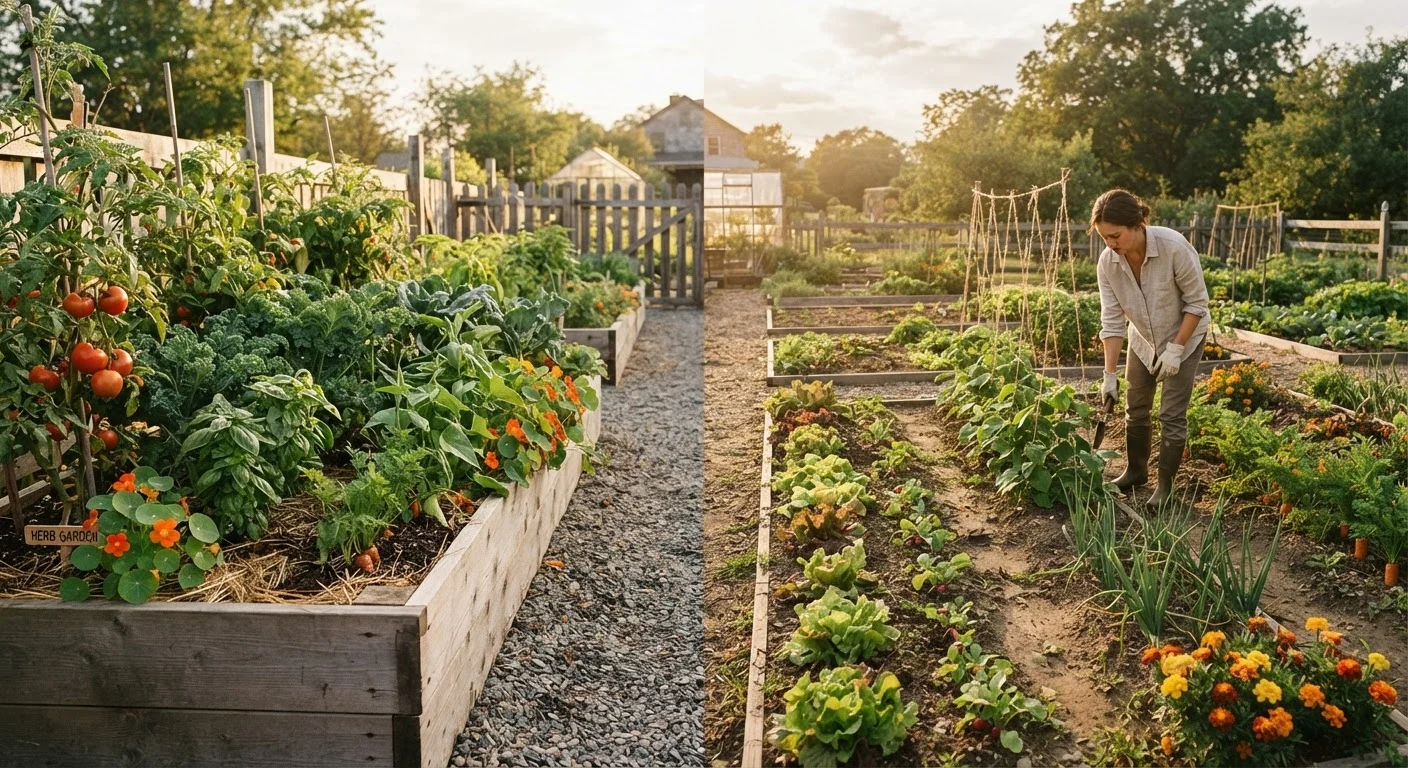
Photo credit: ExplorerGrid.com | Endless Grid Of Factual Content
In this article
Raised beds and in-ground plots each have real trade-offs. Compare drainage, cost, soil control, and maintenance before you dig in.
Key Takeaways
- Raised beds offer superior drainage and soil control but require higher upfront materials costs.
- In-ground plots scale easily for large harvests but depend heavily on existing soil quality.
- Raised beds warm faster in spring, often allowing an earlier planting season.
- In-ground gardens rarely need supplemental watering as frequently in clay-heavy or moisture-retentive soils.
- Your native soil quality and physical accessibility needs are the two most decisive factors when choosing.
Soil Control and Quality
Soil quality is often the deciding factor between a thriving garden and a frustrating one. Raised beds give you complete authority over what goes into the ground. You can fill them with a custom blend — typically a mix of topsoil, compost, and coarser material for drainage — bypassing whatever native soil your yard contains. This is especially valuable if your yard has compacted clay, rocky ground, or soil that may have been exposed to herbicides or contaminants.
In-ground gardens work with what's already there. In areas with naturally loamy, well-draining, nutrient-rich soil, that's a real advantage — you can amend gradually with compost and get excellent results over time. See our guide to composting at home for practical ways to build soil fertility regardless of which approach you choose. However, in areas where soil is poor, heavy clay, or excessively sandy, in-ground gardening typically requires significant — and ongoing — amendment work before you see consistent results.
| Criterion | Raised Bed | In-Ground |
|---|---|---|
| Soil control | Complete — fill with custom mix | Depends on native soil quality |
| Upfront cost | Higher (materials + fill soil) | Lower (labor and amendments) |
| Drainage | Excellent by design | Varies by soil type |
| Spring warm-up | Faster — earlier planting | Slower in cold climates |
| Watering frequency | Higher — dries out faster | Lower in moisture-retentive soils |
| Weed pressure | Lower initially, increases over time | Higher, especially year one |
| Accessibility | High when built at suitable height | Requires bending and kneeling |
| Scalability | Limited by material cost | Easily expanded at low cost |
Drainage, Watering, and Temperature
Raised beds drain freely by design, which protects plant roots from waterlogging during heavy rain. Because the soil is elevated and often lighter in composition, it also warms up faster in spring — an advantage that can extend your growing window by two to four weeks in cooler climates. The trade-off is that raised beds dry out more quickly, typically requiring more frequent watering during dry stretches, especially in summer.
In-ground plots often retain moisture longer, particularly in clay-rich soils, reducing how often you need to irrigate. However, that same moisture retention can become a liability in wet years or regions with poor natural drainage, leading to root rot and disease pressure. Temperature regulation also matters: in-ground soil stays cooler longer in spring, which can delay early planting but offers better buffering during summer heat spikes.
Cost and Setup Effort
Upfront cost is where raised beds face their biggest disadvantage. Building materials — lumber, composite boards, or galvanized metal — plus bulk soil and compost can add up quickly. A single 4×8-foot bed, properly filled, typically costs between $100 and $300 depending on materials and local soil prices, though costs vary significantly by region and sourcing decisions.
In-ground plots require primarily labor and amendments. If your soil is workable, the main investment is time: digging, tilling or broadforking, and adding compost. Over multiple seasons, in-ground gardens are nearly always the more economical choice, especially as you scale up growing space. For gardeners just getting started, our guide to starting a vegetable garden from scratch walks through both options in a beginner-friendly format.
~$150–$300
Typical cost for one 4×8-ft raised bed
This estimate reflects combined materials and soil fill costs; actual prices vary by region, material choice, and whether soil is bulk-delivered or bagged.
2–4 weeks
Earlier planting possible in raised beds
Raised beds warm faster in spring due to elevated positioning and improved drainage, commonly enabling earlier soil readiness in cooler US climates.
6–8 inches
Minimum raised bed depth for most vegetables
Most vegetable crops need at least 6 inches of loose, quality growing medium; root vegetables like carrots benefit from 12 inches or more.
Pest Management and Weed Pressure
Raised beds offer a modest structural advantage against certain pests. Adding hardware cloth to the bed bottom can deter burrowing animals such as voles and gophers. The defined perimeter also makes it easier to add row covers or netting. Weed pressure in raised beds tends to be lower in the first few seasons when filled with fresh, weed-seed-free soil, though it increases over time as wind-borne seeds accumulate.
In-ground gardens connect directly to the surrounding soil ecosystem, which can mean more persistent weed pressure from established seed banks. Perennial weeds in particular can be difficult to control without consistent effort. On the pest side, ground-level plots give easier access to beneficial insects and earthworms, which contribute naturally to soil health. To understand which plants might help deter common garden pests, see which plants genuinely deter pests in your garden layout.
Accessibility, Flexibility, and Long-Term Fit
Raised beds built at 18 to 24 inches tall make gardening far more accessible for people with limited mobility, back pain, or knee problems — a factor that becomes increasingly important over time. They're also easier to cover for frost protection and simpler to manage in small or oddly shaped yards. If you're working with a patio or constrained outdoor space, you might also consider container gardening on a patio or balcony as a complementary or alternative approach.
In-ground gardens suit gardeners who want to grow at scale, work with healthy native soil, or plan perennial plantings that benefit from deep, unobstructed root runs. They're also the natural home for larger crops — winter squash, sweet corn, sprawling melons — that can be impractical to fit within a raised bed's footprint. Pairing in-ground perennial plantings with annual raised bed vegetables is a strategy many experienced gardeners use to get the strengths of both systems. For more on balancing plant types across your garden, see perennials vs. annuals planning to think through seasonal structure.

Author
Home & Garden Editorial Team
Home & Garden Editorial Team is the collective byline for our editorial team and contributor network. Articles published under this byline or an editorial pen name are researched, written, and reviewed according to our editorial standards for clarity, consistency, and independence before publication.
View all articles →