
Companion Planting: Which Plant Pairings Have Evidence Behind Them
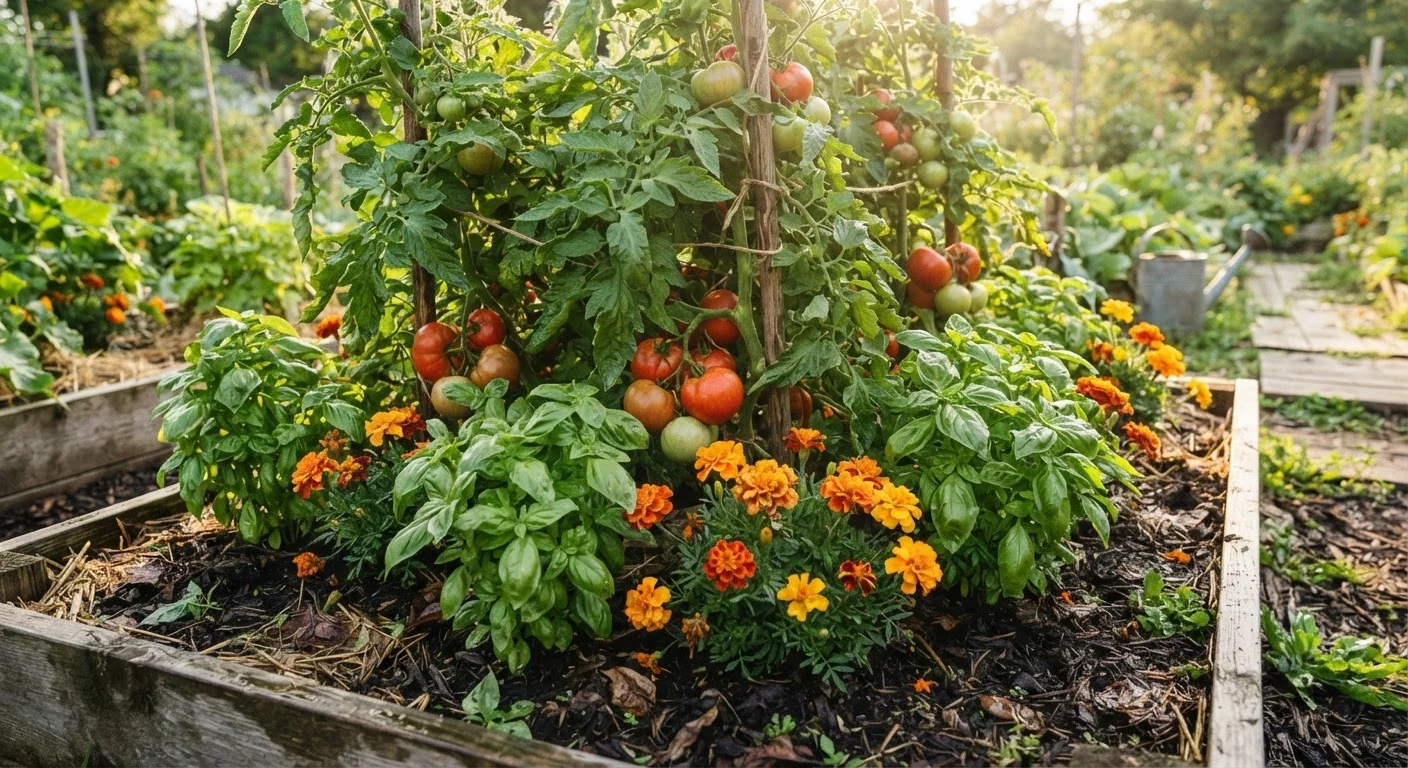
Photo credit: ExplorerGrid.com | Endless Grid Of Factual Content
In this article
Companion planting is popular, but some pairings are folklore and others are well-supported. Here's what the research and experience actually show.
What Companion Planting Actually Claims to Do
Companion planting is the practice of growing certain plants near one another to produce mutual benefits — better pest control, improved pollination, healthier soil, or higher yields. It's one of the oldest concepts in gardening, and it enjoys enormous popularity. The challenge is that the evidence behind specific pairings ranges from well-documented to entirely anecdotal.
Understanding which mechanisms are plausible — and which combinations have actual research support — helps you make smarter planting decisions rather than following garden folklore uncritically. Whether you're designing a raised bed or an in-ground plot, knowing which pairings earn their space is worth the effort.
| Most evidence-supported pairing | The Three Sisters (corn, beans, squash) (Documented in multiple agroecology and polyculture studies) |
| Best nematode-suppressing plant | French marigold (Tagetes patula) (Pest management research, various institutions) |
| Mechanism behind legume companions | Root-associated Rhizobium bacteria fix atmospheric nitrogen |
| Trap crop example | Nasturtiums attract aphids away from vegetables |
| Pairing with weak field evidence | Carrots and tomatoes — no consistent documented benefit |
| Companion planting works best alongside | Good spacing, soil health, and crop rotation |
Pairings With Meaningful Evidence
A handful of classic combinations hold up under scrutiny. Here's what the research and consistent field observation actually support:
The Three Sisters: Corn, Beans, and Squash
This Indigenous North American system — corn, climbing beans, and squash grown together — has some of the strongest polyculture evidence. Beans fix atmospheric nitrogen via root-associated bacteria, feeding the heavy-feeding corn. Corn stalks give beans a structure to climb. Squash's broad leaves shade the soil, reducing moisture loss and suppressing weeds. Multiple studies in agroecology have documented measurable yield and soil benefits from this arrangement.
Tomatoes and Basil
This is one of the most beloved pairings, and while definitive field trials are limited, there is some lab and small-plot evidence that basil's volatile compounds may reduce certain thrip populations on tomatoes. More reliably, basil attracts pollinators and can act as a trap crop for aphids. The pairing is low-risk and the culinary benefit is obvious — they share the same harvest window.
Marigolds and Many Vegetables
French marigolds (Tagetes patula) are among the most evidence-supported companion plants. Research — including studies published in pest management journals — shows that root secretions from French marigolds suppress soil-dwelling nematodes. They also attract beneficial insects like hoverflies. Plant them as a dense border or interspersed throughout beds. For a deeper look at which plants genuinely affect pests, see what evidence says about pest-deterring plants.
Legumes and Almost Any Heavy Feeder
Peas and beans fix nitrogen through root bacteria (Rhizobium), making them legitimate soil-improvers. Planting legumes before or alongside heavy feeders like brassicas or squash can reduce fertilizer needs over time — though the benefit is cumulative and works best with proper crop rotation.
Claims That Are Mostly Folklore
Not every popular pairing earns its reputation. These common recommendations have little or no consistent research support:
- Carrots and tomatoes: Often cited as mutually beneficial, but controlled trials have not reliably demonstrated meaningful benefits to either plant. They can coexist without harm, but the pairing isn't producing documented advantages.
- Roses and garlic: Garlic is frequently recommended as an aphid deterrent for roses. Lab studies show garlic compounds do repel aphids in controlled settings, but field results are inconsistent and planting garlic rarely provides sufficient volatile concentration to protect a full rose bed.
- Nasturtiums as a general pest repellent: Nasturtiums are excellent trap crops — they attract aphids away from vegetables. But they don't broadly repel pests. Understanding this distinction helps set realistic expectations.
If you're gardening in containers, many of these space-intensive combinations need adapting — container gardening has real constraints that affect what companion strategies are practical.
Research on Companion Planting Is Still Evolving
Much of the foundational research on companion planting comes from small-plot or controlled lab settings, which don't always translate directly to backyard garden conditions. Regional soil type, climate, pest populations, and cultivar choices all affect outcomes. Treat published findings as informed starting points, not guarantees, and keep your own planting notes to build evidence specific to your yard.
How to Apply This in Your Garden
Think of companion planting as one tool among many, not a substitute for good soil, watering, and spacing practices. A few principles that hold up well:
- Prioritize documented mechanisms. Nitrogen fixation, physical structure (like the Three Sisters), and trap cropping are well-supported. Vague claims about one plant "confusing" pests are harder to verify.
- Don't crowd plants in pursuit of companions. Proper spacing matters more than any pairing. Poor airflow invites disease regardless of neighbors.
- Observe your own results. Garden conditions vary by region, soil, microclimate, and season. Track what works in your specific yard over multiple growing cycles. This is especially useful when planning a mix of perennials and annuals that share bed space year after year.
- Use trap cropping intentionally. Sacrificial plants like nasturtiums and blue Hubbard squash are among the most practical, evidence-aligned companion strategies available to home gardeners.
Companion planting at its best is thoughtful polyculture — designing a garden that works as a system. When you choose pairings with a plausible mechanism behind them, you're more likely to see real results than when following unexamined tradition.

Author
Home & Garden Editorial Team
Home & Garden Editorial Team is the collective byline for our editorial team and contributor network. Articles published under this byline or an editorial pen name are researched, written, and reviewed according to our editorial standards for clarity, consistency, and independence before publication.
View all articles →