
Pruning Woody Shrubs: Timing, Technique, and Which Cuts Encourage Growth
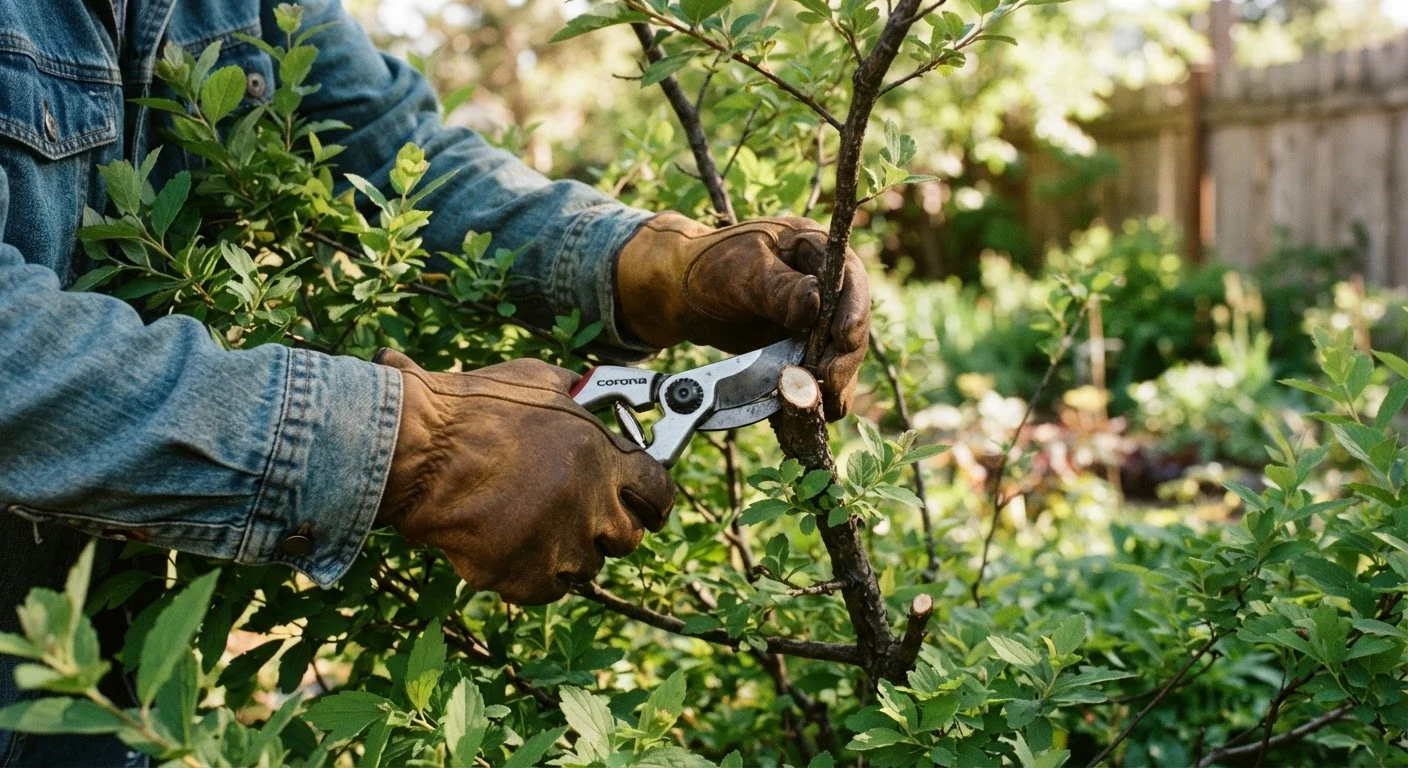
Photo credit: ExplorerGrid.com | Endless Grid Of Factual Content
In this article
Pruning at the wrong time or in the wrong place sets shrubs back. Learn the principles behind when and how to cut for healthy regrowth.
Key Takeaways
- Pruning timing depends on whether your shrub blooms on old wood or new wood.
- Always cut just above a healthy outward-facing bud at a 45-degree angle.
- Sharp, clean tools prevent disease and make cleaner cuts that heal faster.
- Removing no more than one-third of a shrub's growth in a single season protects its health.
- Renewal pruning — removing the oldest stems at ground level — reinvigorates overgrown shrubs over two to three years.
Why Timing Is Everything
The most common pruning mistake isn't a bad cut — it's a well-intentioned cut made at the wrong time of year. Understanding when your shrub sets its flower buds is the key to preserving blooms while still shaping the plant.
Spring-blooming shrubs (lilacs, forsythia, flowering quince) bloom on old wood — growth produced the previous season. Pruning these in fall or early spring removes the buds before they open. The correct window is immediately after flowering, typically late spring, so the shrub has the entire growing season to develop next year's buds.
Summer- and fall-blooming shrubs (butterfly bush, smooth hydrangea, roses) bloom on new wood — growth they put out in the current season. These can be pruned in late winter or very early spring, just before new growth begins, without sacrificing a single bloom.
Evergreen shrubs used primarily for structure (boxwood, yew, holly) are less bloom-dependent. Prune them in late winter or after a flush of new growth hardens off in early summer. Avoid pruning any woody shrub in late summer or early fall — that stimulates tender new growth that won't harden before frost.
See our fall garden prep checklist for guidance on which tasks to complete before the ground freezes — including which shrubs benefit from a light cleanup versus those best left until spring.
The Mechanics of a Good Cut
Where you cut on a branch is just as important as when you cut. Every pruning cut should serve a clear purpose: removing dead or diseased material, improving air circulation, or directing growth outward.
For any shrub, begin by walking around it and removing the three Ds — dead, damaged, and diseased wood — before shaping. This alone often improves appearance significantly and reduces the risk of spreading pathogens into healthy tissue.
Renewal Pruning for Overgrown Shrubs
An overgrown shrub with a dense thicket of crossing, shaded-out stems can be gradually restored through renewal pruning. Rather than cutting everything back at once — which stresses the plant severely — the approach spans two to three growing seasons.
Each year, remove up to one-third of the oldest, thickest stems by cutting them at or near ground level. This opens the shrub's center to light and air, stimulating vigorous new shoots from the base. By the third year, the shrub consists entirely of younger, more productive wood.
When Not to Attempt Renewal Pruning
Some shrubs — particularly slow-growing evergreens like Japanese holly or dwarf Alberta spruce — do not readily produce new growth from old wood and can be permanently disfigured or killed by hard cutting. Always research your specific cultivar before attempting aggressive renewal. When in doubt, remove no more than 20% of the plant in any single season and reassess.
Renewal pruning works well for lilacs, forsythia, viburnums, and native shrubs like beautyberry. It's less appropriate for grafted shrubs or those that don't produce basal shoots readily — always research your specific plant before taking a drastic approach.
Thinking more broadly about your landscape design? Our guide on drought-tolerant landscaping explains how to select and site shrubs that stay manageable with minimal intervention — reducing how often heavy pruning becomes necessary.
Tools, Hygiene, and Quick-Start Actions
Pruning results are only as good as your tools. Bypass pruners (two curved blades that slide past each other) make the cleanest cuts on stems up to about ¾ inch in diameter. Loppers handle branches up to 1½ inches; a pruning saw handles anything larger. Avoid anvil-style pruners on live wood — they crush rather than slice, leaving ragged tissue prone to disease.
Disinfect blades between shrubs — especially when working around plants showing signs of disease — using a diluted bleach solution or isopropyl alcohol. Allow tools to air-dry before the next cut to prevent rusting. Sharpen blades at least once per season; a dull blade tears bark unnecessarily.
For gardeners building out a full planting plan, the principles in planning a garden with perennials and annuals can help you choose companions that fill visual gaps while shrubs recover from a hard pruning season.

Author
Home & Garden Editorial Team
Home & Garden Editorial Team is the collective byline for our editorial team and contributor network. Articles published under this byline or an editorial pen name are researched, written, and reviewed according to our editorial standards for clarity, consistency, and independence before publication.
View all articles →