
Drought-Tolerant Landscaping: Designing an Outdoor Space That Thrives on Less Water
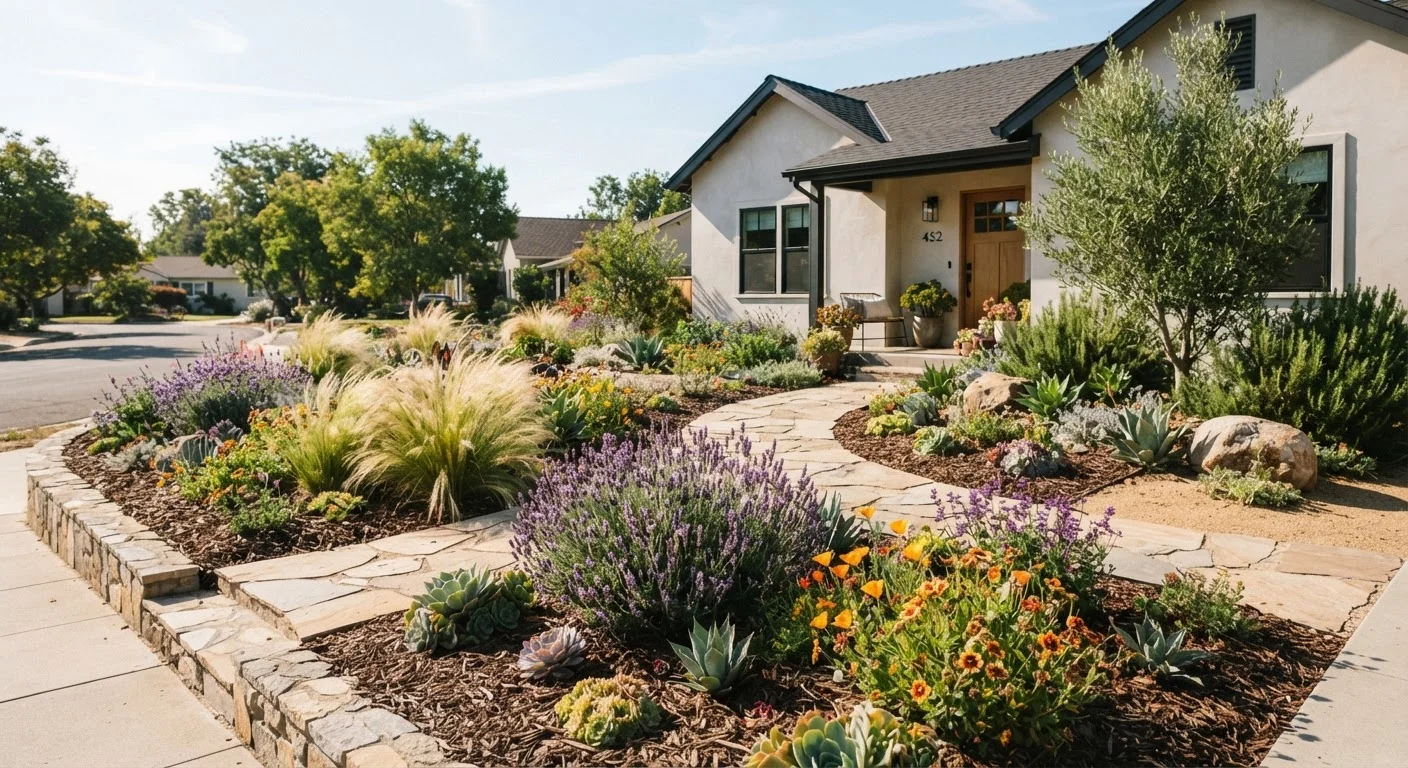
Photo credit: ExplorerGrid.com | Endless Grid Of Factual Content
In this article
A comprehensive guide to xeriscaping principles, plant selection, mulching, and irrigation strategies that reduce water dependence in your yard.
Key Takeaways
- Grouping plants by water needs—called hydrozoning—is one of the most effective water-saving design strategies.
- Native and regionally adapted plants generally establish faster and need less supplemental irrigation once rooted.
- Three to four inches of organic mulch can reduce soil moisture evaporation by up to 70 percent.
- Drip irrigation and soaker hoses deliver water directly to roots, cutting waste compared to overhead sprinklers.
- Reducing traditional turf is often the single biggest opportunity to lower landscape water use.
- Proper soil amendment upfront dramatically improves a plant's long-term drought resilience.
What Is Xeriscaping and Why It Matters
Xeriscaping — from the Greek xeros, meaning dry — is a landscape design philosophy built around reducing or eliminating the need for supplemental irrigation. It originated in water-stressed regions of the American West in the early 1980s but applies broadly wherever water conservation matters, including humid climates experiencing seasonal drought.
The goal isn't a yard full of rocks and cactus. Done well, a water-wise landscape can be colorful, layered, and inviting through most of the growing season. The core idea is matching plants to place: selecting species whose natural water requirements align with what your climate reliably delivers, then supporting them with the right soil, mulch, and targeted irrigation.
With water costs rising and drought conditions increasingly common across much of the US, thoughtful xeriscaping can meaningfully reduce both your water bill and your yard's environmental footprint — without sacrificing curb appeal.
When selecting plants at a nursery, look for ones already growing in modest-sized pots without heavy feeding — root-bound, over-fertilized specimens often struggle to adapt to lean, dry garden conditions.
Plants that have been grown under nursery conditions of rich soil and frequent irrigation sometimes take longer to develop the deep root systems that support genuine drought resilience after transplanting.
Install a simple rain gauge in your yard and log readings for one full season before redesigning your irrigation schedule — actual local rainfall often differs significantly from regional averages.
Irrigation timing calibrated to real on-site data, rather than general guidelines, prevents both overwatering and avoidable plant stress during dry spells.
Assessing Your Site Before You Plant
Successful drought-tolerant landscaping begins with observation, not shopping. Before selecting a single plant, spend time understanding your yard's microclimates — areas that are hotter, shadier, windier, or better-drained than others. South- and west-facing slopes bake in afternoon sun and dry out fastest. Low spots may hold moisture far longer after rain.
Check your soil type. Sandy soils drain quickly and dry fast; clay soils hold water but can become compacted and waterlogged. A simple jar test — filling a jar with a soil sample and water, shaking it, then letting it settle for 24 hours — will show rough proportions of sand, silt, and clay. Understanding this tells you whether to amend before planting and which plants will perform naturally in your conditions.
Consult your USDA Hardiness Zone to narrow plant choices, but also note your region's average annual rainfall, typical dry seasons, and frost dates. This full picture guides plant selection far more reliably than zone alone.
Choosing Drought-Tolerant Plants
Plant selection is where xeriscaping becomes genuinely rewarding. Native plants adapted to your region are typically the most resilient choice — they evolved alongside local rainfall patterns, soils, and pollinators. Regional native plant societies and cooperative extension offices maintain lists specific to your state or county.
Beyond true natives, many non-native species are regionally adapted and perform well with minimal supplemental water once established. Mediterranean herbs like lavender, rosemary, and sage thrive in dry summers. Ornamental grasses such as blue grama, little bluestem, and feather reed grass add movement and texture while tolerating dry spells. Perennials like coneflower (Echinacea), black-eyed Susan, and yarrow are widely adaptable, long-lived, and pollinator-friendly.
A key design principle is hydrozoning: grouping plants with similar water needs together. This prevents overwatering some plants to satisfy others and makes irrigation far more efficient. High-water plants, if you include any, should be reserved for small, easily managed zones — near a downspout, for example — rather than scattered throughout the bed.
If you're also cultivating edibles, our guide to starting a vegetable garden from scratch covers site selection principles that complement xeriscape planning.
Soil Preparation and Mulching
Healthy soil is the foundation of any drought-resilient landscape. Most native and drought-adapted plants prefer well-drained soil over rich, heavily amended beds — excess organic matter can actually encourage shallow, water-dependent roots. For sandy or compacted clay soils, moderate amendment with compost improves structure and water retention without creating lush growing conditions that plants later struggle to maintain without irrigation.
Mulch is one of the most cost-effective tools in a xeriscape. A 3- to 4-inch layer of organic mulch — shredded bark, wood chips, or straw — over planting beds insulates the soil, dramatically slows evaporation, suppresses weeds that compete for moisture, and moderates soil temperature extremes. Research from university extension programs consistently shows that mulching can reduce soil moisture loss by 50 to 70 percent compared to bare soil.
Keep mulch pulled back an inch or two from plant stems and tree trunks to prevent rot. Replenish it annually or as it decomposes. For fall timing and soil prep tasks, see our fall garden prep checklist.
Apply Mulch Before Peak Summer Heat
The best time to mulch is in late spring, just as soil has warmed but before summer heat peaks. This locks in moisture at the start of the driest period. If you mulch in fall, you also moderate soil temperature swings that can stress plant roots through freeze-thaw cycles.
Efficient Irrigation Strategies
Even drought-tolerant plants typically need supplemental water during their first one to two growing seasons while root systems establish. The goal is to irrigate efficiently during this window, then taper off as plants mature.
Drip irrigation and soaker hoses are the gold standard for water-wise yards. They deliver water slowly and directly to the root zone, minimizing evaporation and runoff. Overhead sprinklers, by contrast, can lose 30 to 50 percent of water to evaporation and wind drift before it ever reaches the soil.
Water deeply and infrequently rather than shallowly every day. Infrequent deep watering encourages roots to grow downward toward consistent moisture, building genuine drought resilience. Shallow, frequent watering trains roots to stay near the surface, where they're vulnerable to drying out. For a deeper look at common watering mistakes, see The Overwatering Myth and Other Irrigation Misconceptions.
Water early in the morning when temperatures are coolest to reduce evaporation loss. If you use a timer, schedule irrigation around actual weather — skip cycles after significant rain. A simple rain sensor on an automated system pays for itself quickly.
“The best irrigation system is one you can set based on actual plant and soil need — not habit or convenience. Most landscapes are significantly overwatered, and the plants would tell you so if leaves and roots could speak.”
— Water Conservation Extension Specialist, University Cooperative Extension Service
Reducing or Replacing Lawn Turf
Traditional cool-season or warm-season turf lawns are among the thirstiest elements of a typical American yard. Reducing lawn area is often the single highest-impact change you can make to lower landscape water consumption.
Replace struggling or underused lawn sections with mulched planting beds, pathways of decomposed granite or flagstone, or ground-covering plants. Low-growing options like creeping thyme, buffalo grass, or clover can handle light foot traffic and require a fraction of the water that traditional turf needs. Our guide to low-maintenance ground covers covers a range of options suited to shady, dry, or high-traffic areas.
If retaining some lawn is important — for children, pets, or recreation — consider transitioning to a drought-tolerant turf variety suited to your region. Buffalograss and tall fescue are among the options with lower water requirements compared to Kentucky bluegrass or St. Augustine in appropriate climates.
Ongoing Maintenance in a Water-Wise Yard
Established xeriscape plantings are genuinely lower-maintenance than traditional landscapes, but they aren't no-maintenance. Weeding is important, especially in the first season — weeds compete directly for limited soil moisture. A thick mulch layer is your first defense; hand-pulling early and often prevents weeds from going to seed and multiplying.
Pruning shapes plants, removes dead growth, and can encourage deeper root development. For woody shrubs in your xeriscape, timing and technique matter considerably — see our article on pruning woody shrubs for guidance on when and how to cut. Avoid heavy fertilization, which pushes lush, water-hungry growth that undermines drought tolerance.
Monitor plants during their first two dry seasons and intervene with targeted irrigation if you see stress. Once a plant has been in the ground for two to three years, its root system is typically deep enough to sustain itself through normal dry periods without supplemental watering. At that point, your maintenance routine simplifies considerably — and your water use drops accordingly.
50–70%
Soil moisture loss reduced by mulching
University extension research consistently shows that 3–4 inches of organic mulch dramatically slows evaporation compared to bare soil.
30–50%
Water lost to evaporation with overhead sprinklers
According to water conservation researchers, overhead irrigation can lose nearly half its output before water reaches plant roots on warm or windy days.
~50%
Of household water used outdoors in summer
The US Environmental Protection Agency estimates that outdoor water use accounts for roughly half of total household water consumption during peak summer months.

Author
Home & Garden Editorial Team
Home & Garden Editorial Team is the collective byline for our editorial team and contributor network. Articles published under this byline or an editorial pen name are researched, written, and reviewed according to our editorial standards for clarity, consistency, and independence before publication.
View all articles →