
What USDA Hardiness Zones Actually Mean for Your Garden
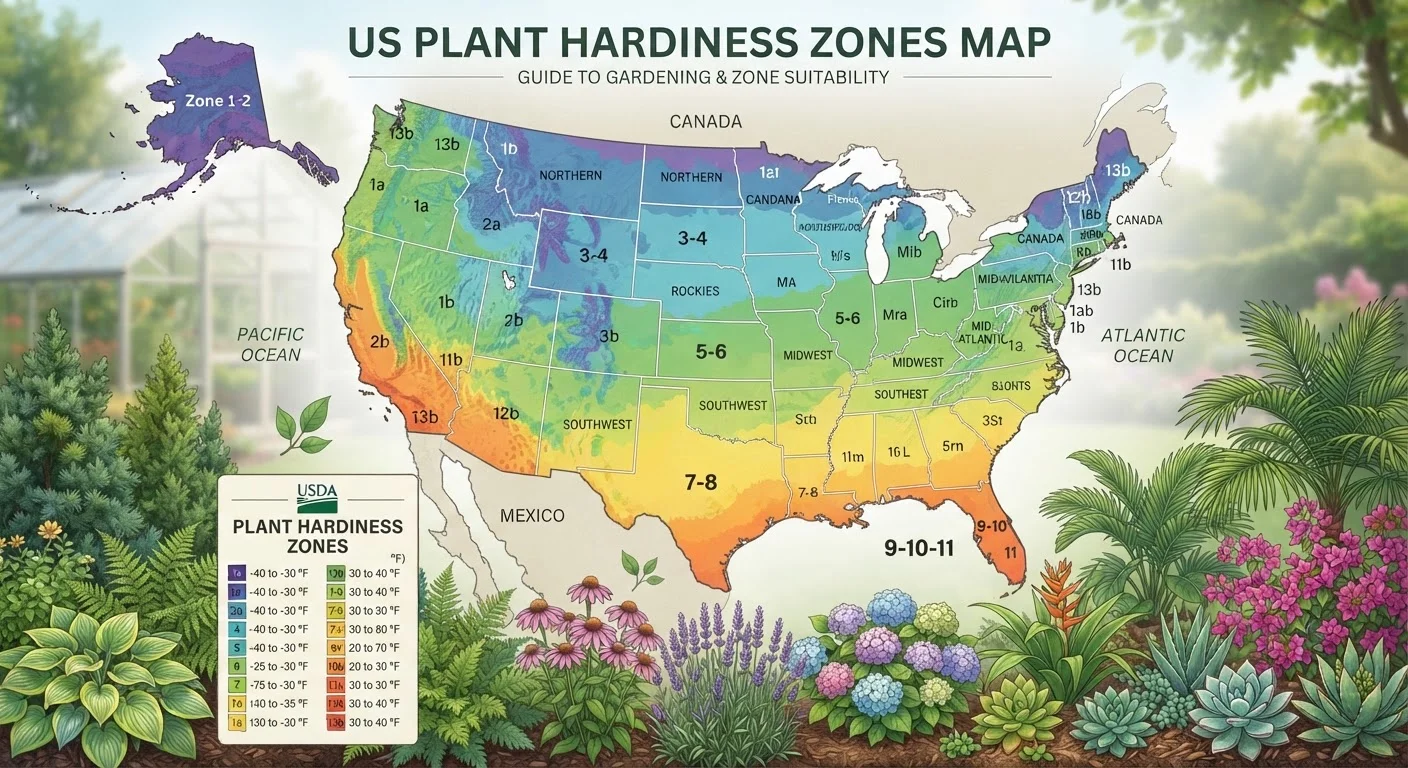
Photo credit: ExplorerGrid.com | Endless Grid Of Factual Content
In this article
Hardiness zones guide plant selection, but they only tell part of the story. Here's how to read them correctly and where their limits lie.
Key Takeaways
- USDA zones measure only average minimum winter temperature — not heat, humidity, rainfall, or frost dates.
- Each zone is split into 'a' and 'b' half-zones representing a 5°F difference for finer precision.
- A plant labeled hardy to Zone 6 can survive Zone 6 winters but may not thrive in Zone 6 summers.
- Microclimates within your yard can make planting conditions warmer or colder than your official zone.
- Zone maps are a starting point, not a guarantee — local soil, drainage, and wind exposure all matter.
What the Zone Number Actually Measures
The zone number on a plant label answers one specific question: Can this plant survive winter cold in your area? That's it. The USDA calculates each zone using the average annual extreme minimum temperature — in other words, the coldest it typically gets in a given location over a 30-year period. A plant rated hardy to Zone 6 has been found to survive temperatures as low as −10°F, which is the minimum range for that zone.
Each zone is further divided into two half-zones: 'a' (the colder half) and 'b' (the warmer half), each representing a 5°F difference. So Zone 7a experiences lows between 0°F and 5°F, while Zone 7b sits between 5°F and 10°F. This extra precision matters when you're pushing the limits of a plant's cold tolerance.
Zones Measure Cold, Not Climate
The USDA hardiness zone only reflects average minimum winter temperature — it says nothing about summer heat, humidity, annual rainfall, frost dates, or wind. Two locations in the same zone can have dramatically different growing seasons. Always supplement zone information with local frost date data and regional growing guides from your state's cooperative extension service.
What zones don't measure is equally important. Summer heat, humidity, rainfall totals, frost dates, soil type, and wind exposure are all outside the scope of the hardiness zone system. A gardener in humid Zone 7 Virginia and one in arid Zone 7 New Mexico share the same zone number but face very different growing conditions.
Reading a Plant Tag the Right Way
When you see "Hardy to Zone 5" on a plant tag, it means the plant can tolerate the average minimum winter temperatures typical of Zone 5 (−20°F to −10°F). It does not mean the plant will perform beautifully in your Zone 5 garden — it only means it's likely to survive the winter.
Other factors on the tag deserve equal attention:
- Sun requirements: Full sun, part shade, or full shade affects placement more than zone in many cases.
- Mature size: A shrub that fits your Zone 7 garden today may outgrow its space within five years.
- Soil and drainage preferences: A plant rated for your zone but intolerant of clay soil will still struggle.
For perennials, shrubs, and trees — plants expected to return year after year — zone ratings carry real practical weight. For annuals, which complete their lifecycle in a single season, zone numbers are largely irrelevant.
How Microclimates Can Shift Your Effective Zone
Your official zone is an average across a geographic area, but your specific yard has its own microclimate. A south-facing brick wall absorbs heat and radiates it overnight, potentially creating conditions one half-zone warmer than your surroundings. A low-lying area in your backyard may collect cold air and experience harder frosts than your neighbors on higher ground — effectively behaving like a colder half-zone.
Common microclimate factors to observe in your own yard include:
- Walls and fences: South- and west-facing surfaces radiate warmth, extending the growing season nearby.
- Tree canopy: Overhead cover slows radiative heat loss on cold nights, providing frost protection.
- Slope and drainage: Cold air drains downhill; low spots are frost-prone even when surrounding areas are fine.
- Pavement and hardscape: Absorbs daytime heat and warms adjacent soil, which matters for container plants. See our guide to container gardening on patios and balconies for how this plays out in practice.
Spending one or two winters simply observing where frost hits first — and where it doesn't — gives you far more actionable information than a zone number alone.
Zones Are a Starting Point, Not the Whole Story
Experienced gardeners treat hardiness zones as a filter, not a final answer. Start by confirming a plant is rated for your zone, then layer in local knowledge: your last average frost date, typical summer humidity, soil drainage, and irrigation needs.
For winter preparation, your zone is a useful guide for timing. Gardeners in colder zones (4 and below) need to act earlier — mulching, cutting back perennials, and protecting root zones before the ground freezes. Our fall garden prep checklist walks through those steps by task type. In warmer, drier zones, heat and water availability are often more limiting than winter cold; drought-tolerant landscaping strategies address those constraints directly.
The zone system has real value — it prevents obvious mismatches, like planting a tropical hibiscus outdoors in Minnesota and expecting it to overwinter. But the most successful gardeners combine zone awareness with direct observation of their own land, their local extension office's recommendations, and a willingness to experiment in sheltered spots.
Frequently Asked Questions

Author
Home & Garden Editorial Team
Home & Garden Editorial Team is the collective byline for our editorial team and contributor network. Articles published under this byline or an editorial pen name are researched, written, and reviewed according to our editorial standards for clarity, consistency, and independence before publication.
View all articles →