
Container Gardening on a Patio or Balcony: What Works and What Struggles
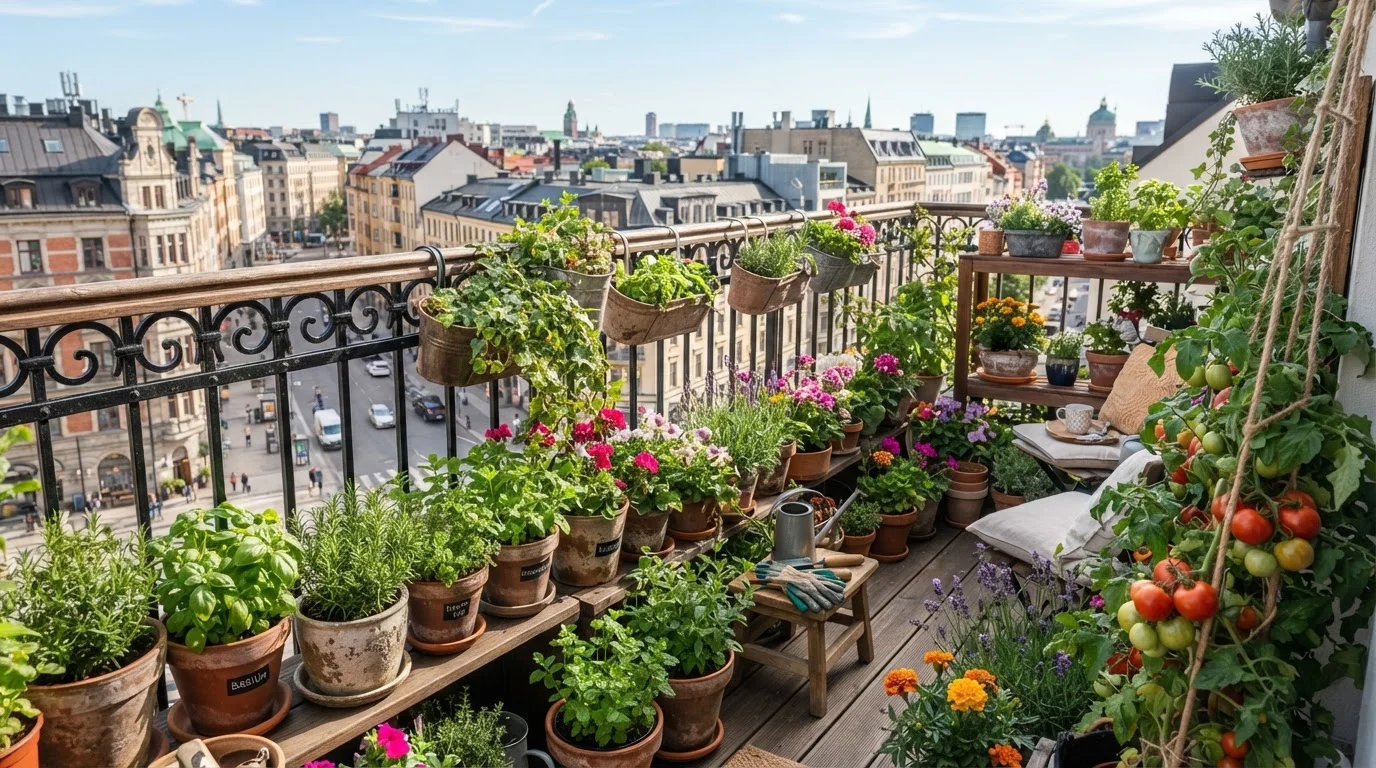
Photo credit: ExplorerGrid.com | Endless Grid Of Factual Content
In this article
Container gardens open up growing possibilities on hard surfaces, but they come with real constraints. A balanced look at what to expect.
Key Takeaways
- Container gardening works on nearly any hard surface, including balconies, patios, and rooftops.
- Watering frequency is significantly higher for containers than for in-ground beds.
- Weight limits on balconies must be checked before adding large pots or multiple containers.
- Herbs, leafy greens, and compact fruiting plants tend to perform best in containers.
- Soil quality and drainage are entirely under the gardener's control in container setups.
Full control over soil quality and composition
Container gardeners choose their own potting mix from the start, avoiding the compaction, drainage problems, or nutrient deficiencies common in native soil.
Works on any hard surface with no yard required
Balconies, patios, rooftops, and even driveways can support a container garden, making growing accessible to renters and urban dwellers who lack in-ground access.
Plants can be moved to optimize light and shelter
Unlike fixed beds, containers allow you to reposition plants in response to weather, changing sun angles across seasons, or frost warnings.
Season can be extended by moving pots indoors
Small to medium containers can be brought inside before frost, giving cold-sensitive plants additional weeks of productive growth.
Pest and weed pressure is often lower than in-ground
Fresh potting mix contains fewer weed seeds, and the physical separation of containers can limit soil-borne pest spread compared to a continuous garden bed.
Daily watering is often unavoidable in warm weather
Containers lose moisture far faster than in-ground beds, especially in heat or wind. Small or terracotta pots may need water twice a day during summer peaks.
Nutrients deplete quickly and need frequent replenishment
Regular watering leaches fertilizer from potting mix within four to six weeks, requiring a consistent liquid feeding schedule throughout the growing season.
Balcony weight limits restrict how much you can grow
Wet soil and ceramic containers are heavy. Large container gardens can exceed safe load limits on residential balconies if not carefully planned.
Root space restricts the size of plants you can grow
Deep-rooted vegetables, large shrubs, and sprawling plants struggle or fail in containers because their root systems can't expand adequately.
Containers are a significant ongoing cost
Quality pots, potting mix, fertilizers, and irrigation equipment represent a higher per-square-foot cost than most in-ground gardening approaches.
Why Container Gardening Has Real Appeal
Growing plants in containers isn't a compromise — for many gardeners, it's the only practical option. Patios and balconies offer no soil access, yet with the right containers and mix, these spaces can sustain herbs, vegetables, and flowering plants through an entire season.
One of the clearest advantages is soil control. In-ground gardeners inherit whatever soil is already there — compacted clay, sandy loam, or something in between. Container gardeners start with a blank slate, selecting a potting mix suited to their specific plants. This matters especially for edibles: a well-structured potting mix drains properly, holds adequate moisture, and provides consistent nutrition in a way that native soil rarely does without significant amendment.
Mobility is another genuine benefit. If a container plant is struggling in one spot — not enough light, too much wind — you can move it. That kind of instant adjustment simply isn't available with in-ground or raised bed setups. On a west-facing balcony that gets afternoon sun, you can rotate sun-loving herbs to the hottest corner while keeping shade-tolerant lettuces tucked back.
Full control over soil quality and composition
Container gardeners choose their own potting mix from the start, avoiding the compaction, drainage problems, or nutrient deficiencies common in native soil.
Works on any hard surface with no yard required
Balconies, patios, rooftops, and even driveways can support a container garden, making growing accessible to renters and urban dwellers who lack in-ground access.
Plants can be moved to optimize light and shelter
Unlike fixed beds, containers allow you to reposition plants in response to weather, changing sun angles across seasons, or frost warnings.
Season can be extended by moving pots indoors
Small to medium containers can be brought inside before frost, giving cold-sensitive plants additional weeks of productive growth.
Pest and weed pressure is often lower than in-ground
Fresh potting mix contains fewer weed seeds, and the physical separation of containers can limit soil-borne pest spread compared to a continuous garden bed.
Container setups also let you extend the growing season more easily. Small pots can be brought indoors ahead of a frost, or moved under an overhang during heavy rain. For gardeners in regions with short growing windows, this extra flexibility can meaningfully increase the harvest period.
What Grows Well in Containers
Not every plant adapts equally well to life in a pot. The most reliable performers are those with compact root systems and modest space requirements.
- Herbs: Basil, parsley, chives, mint, and thyme all thrive in containers. Mint should be kept in its own pot — it spreads aggressively and will crowd out neighbors.
- Leafy greens: Lettuce, spinach, arugula, and Swiss chard mature quickly and tolerate smaller containers. Succession planting — sowing a new round every two to three weeks — works especially well in containers where you control the soil freshness.
- Compact fruiting vegetables: Determinate (bush-type) tomatoes, peppers, and dwarf eggplant varieties can produce well in 5-gallon or larger containers. Look for varieties specifically bred for container culture.
- Annual flowers: Petunias, nasturtiums, and calibrachoa add color and attract pollinators. See how annuals and perennials compare if you want to mix long-term plantings with seasonal blooms.
Plants that tend to struggle include large indeterminate tomatoes (which need deep root runs), corn (which requires cross-pollination over a wide area), and most root vegetables like carrots and parsnips, which need more depth than most containers provide.
The Real Challenges You Should Plan For
Container gardening's constraints are not minor inconveniences — they require consistent attention to manage successfully.
Daily watering is often unavoidable in warm weather
Containers lose moisture far faster than in-ground beds, especially in heat or wind. Small or terracotta pots may need water twice a day during summer peaks.
Nutrients deplete quickly and need frequent replenishment
Regular watering leaches fertilizer from potting mix within four to six weeks, requiring a consistent liquid feeding schedule throughout the growing season.
Balcony weight limits restrict how much you can grow
Wet soil and ceramic containers are heavy. Large container gardens can exceed safe load limits on residential balconies if not carefully planned.
Root space restricts the size of plants you can grow
Deep-rooted vegetables, large shrubs, and sprawling plants struggle or fail in containers because their root systems can't expand adequately.
Containers are a significant ongoing cost
Quality pots, potting mix, fertilizers, and irrigation equipment represent a higher per-square-foot cost than most in-ground gardening approaches.
The most demanding issue is watering. Containers dry out far faster than in-ground beds, especially in summer heat and on exposed balconies. A single hot afternoon can stress plants in small pots to the point of wilting. Most container gardens need daily watering in warm weather, and sometimes twice a day for small or terracotta pots. Gardeners who travel frequently or can't commit to a daily check should either invest in a drip irrigation system or plan for containers that hold moisture well.
Nutrition is another ongoing challenge. Regular watering leaches nutrients from potting mix more quickly than from soil. Most potting mixes provide nutrition for only four to six weeks, after which container plants need consistent fertilization — typically a balanced liquid fertilizer applied every one to two weeks during the growing season.
If you're gardening on a balcony specifically, weight is a non-negotiable concern. Wet soil, large ceramic pots, and dense plantings add up quickly. Before assembling a substantial container garden, check your building's load specifications — this information is sometimes available from a property manager or structural engineer. Lightweight containers and high-quality, peat-free potting mixes that weigh less when dry can help manage this constraint.
Finally, pests and disease behave differently in containers. Aphids, fungus gnats, and powdery mildew are all common container problems. Because container plants are often in closer proximity than garden beds, problems can spread quickly between pots.
Setting Up for Success
A few setup decisions made early can significantly reduce the ongoing effort required.
Choose the right container size. Bigger is generally better for most vegetables. A 5-gallon pot is a practical minimum for tomatoes and peppers; herbs can get by with 1–2 gallons. Undersized containers restrict root growth and dry out faster.
Prioritize drainage. Every container must have drainage holes. Standing water leads to root rot quickly. Place pots on risers or feet so water can escape freely, and use a well-draining potting mix rather than garden soil, which compacts in containers.
Enrich your soil regularly. Incorporating compost into your potting mix each season improves moisture retention and nutrition. Home composting can supply a steady stream of organic matter to refresh containers between growing seasons.
Group containers strategically. Clustered pots create a slightly more humid microclimate, slow individual pots from drying as fast, and make watering more efficient. They also look more intentional as a design.
For those considering expanding beyond containers entirely, starting a vegetable garden from scratch provides a thorough grounding in site selection and planning for in-ground growing when that becomes an option.
Check Your Lease and Building Rules First
Before investing in a large container garden on a rental balcony, review your lease agreement and consult your property manager. Some buildings restrict the type, weight, or number of containers permitted on balconies for structural and liability reasons. Getting clarity upfront avoids having to dismantle a garden you've already built.

Author
Home & Garden Editorial Team
Home & Garden Editorial Team is the collective byline for our editorial team and contributor network. Articles published under this byline or an editorial pen name are researched, written, and reviewed according to our editorial standards for clarity, consistency, and independence before publication.
View all articles →