
The Myths Homeowners Believe About Basement Waterproofing
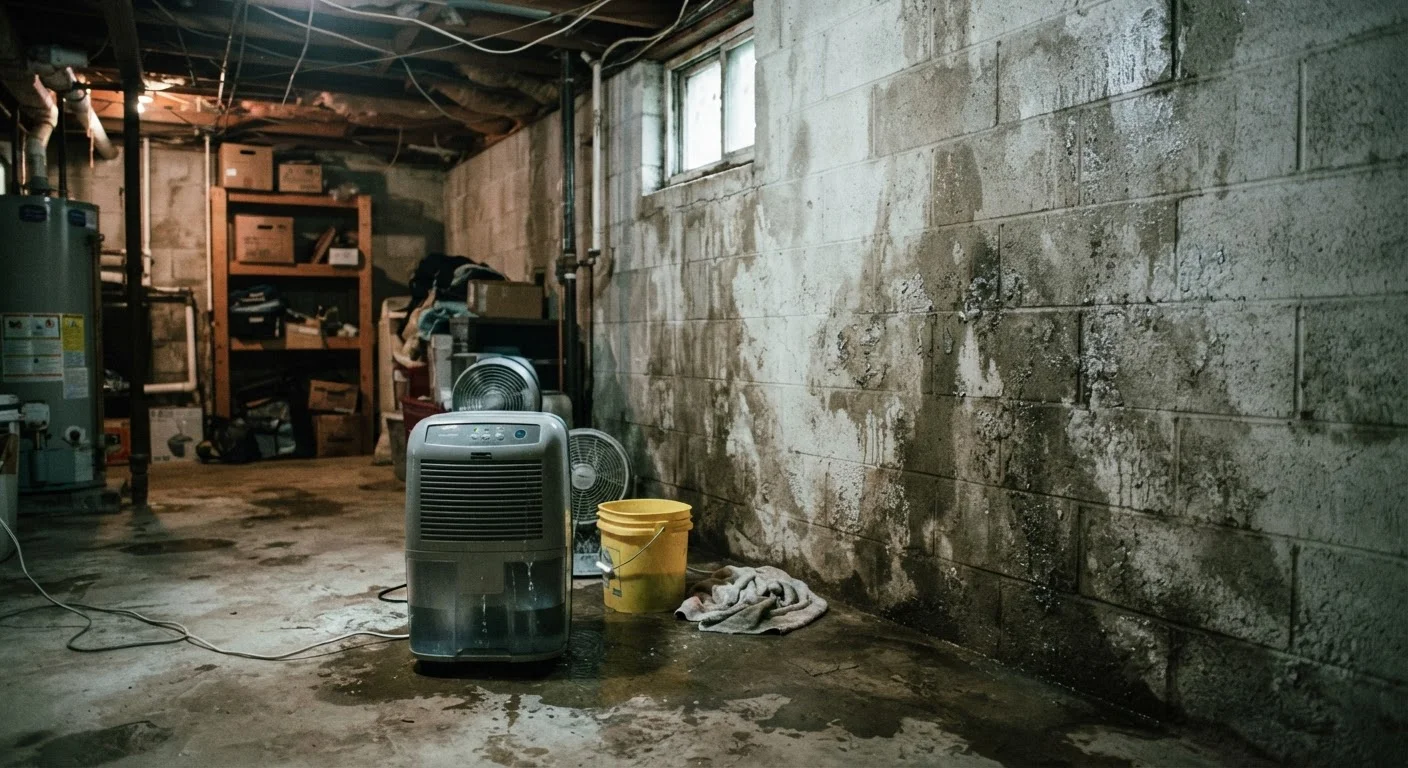
Photo credit: ExplorerGrid.com | Endless Grid Of Factual Content
In this article
Paint-on sealers, grading fixes, and interior drains each have real limitations. Separate waterproofing fact from fiction before spending a dollar.
Key Takeaways
- Paint-on waterproofing sealers stop vapor but cannot hold back active hydrostatic water pressure.
- Regrading your yard helps, but it rarely solves a basement water problem on its own.
- Interior drainage systems manage water after it enters — they don't prevent entry.
- Cracks in poured concrete walls are not always structural, but all cracks should be evaluated promptly.
- The right waterproofing strategy depends on the source of water, not a one-size-fits-all solution.
Why Basement Waterproofing Myths Persist
Basement waterproofing is one of the most misunderstood areas of home maintenance — partly because water intrusion takes many forms, and partly because the marketplace is crowded with products that promise more than they deliver. Homeowners facing a damp or flooded basement are understandably eager for a quick, affordable fix. That urgency makes it easy to latch onto incomplete solutions and call the job done until the next heavy rain proves otherwise.
Getting the diagnosis right before spending money is the single most important step. As we cover in our article on why deferred maintenance compounds costs, waiting on a water problem — or patching it incorrectly — almost always leads to larger bills later. Below, we separate the most common myths from what the evidence actually shows.
Common Myths — and the Facts That Replace Them
The following myth-and-fact pairs cover the misconceptions our editorial team hears most often from homeowners dealing with basement moisture. Read each one carefully before deciding on an approach.
Myth
Applying a waterproofing paint or sealer to basement walls will keep water out for good.
Fact
Masonry sealers slow vapor transmission but cannot withstand sustained hydrostatic pressure — the force of water-saturated soil pushing against your foundation.
Crystalline and polymer-based coatings sold at home improvement stores are marketed as waterproofing solutions, but the distinction between damp-proofing and waterproofing matters enormously. Damp-proofing resists moisture vapor under normal conditions. True waterproofing must resist liquid water under pressure. When groundwater builds up against your foundation after a storm, that pressure can exceed what any interior coating is engineered to handle — and the coating will peel, crack, or allow water through regardless of how many coats you applied. These products have a legitimate role as a supplemental vapor barrier in low-risk basements; they are not a standalone fix for active leaks.
Myth
Regrading the yard around the house will eliminate basement water problems.
Fact
Proper grading reduces surface water runoff directed toward the foundation, but it does not address groundwater, drainage system failures, or water already entering through existing cracks.
Current guidance from building science professionals generally recommends a slope of at least 6 inches of drop over the first 10 feet away from the foundation. Correcting negative grading (slope toward the house) is a worthwhile first step and can meaningfully reduce water intrusion caused by surface runoff. However, grading does nothing to lower the water table, redirect subsurface groundwater, or seal existing cracks in your foundation walls. Homeowners who regrade and then feel the problem is solved sometimes delay more targeted repairs for years — long enough for water damage to progress significantly.
Myth
Interior drainage systems (drain tile and sump pumps) waterproof the basement.
Fact
Interior drainage systems collect and redirect water that has already entered the basement. They manage the symptom, not the source.
This is one of the most commercially promoted misconceptions in the industry. Interior perimeter drain systems — often called French drains or drain tile — are installed beneath the basement floor along the footing. They channel water that seeps in to a sump pit, where a pump removes it. This approach is effective at keeping a basement dry and is often the most practical solution when exterior excavation is cost-prohibitive. But it's worth understanding clearly: water is still entering the foundation. The system intercepts it before it pools. Exterior waterproofing membranes applied to the outside of the foundation wall are the only approach that genuinely stops water before it contacts the structure.
Myth
A crack in a poured concrete basement wall is a serious structural emergency.
Fact
Many hairline cracks in poured concrete are the result of normal curing shrinkage and pose no immediate structural threat — but all cracks should be evaluated by a professional.
Concrete shrinks slightly as it cures, and vertical hairline cracks near the center of a wall are a common, generally non-structural result of that process. Horizontal cracks, stair-step cracks in block foundations, and cracks that are wider at one end than the other are more concerning and can indicate soil pressure, settlement, or structural movement. No homeowner should attempt to diagnose the severity on their own. A structural engineer or experienced foundation contractor should evaluate any crack before it is simply filled and forgotten. Even a non-structural crack creates a reliable path for water, so repair is still warranted — the urgency and method depend on the cause.
Myth
Once a basement is waterproofed professionally, it requires no further attention.
Fact
Waterproofing systems — especially sump pumps and interior drainage — require regular inspection and maintenance to remain effective.
Exterior waterproofing membranes can degrade over decades, drainage tile can become clogged with sediment or roots, and sump pumps have mechanical lifespans typically ranging from 7 to 10 years under normal use. A professionally installed system that is never inspected will eventually fail, often at the worst possible time. Annual checks of the sump pump (including testing the float switch), clearing debris from window well drains, and monitoring known crack repairs for new movement are basic maintenance tasks that extend the life of any waterproofing investment.
Choosing the Right Strategy for Your Situation
No single product or technique works for every basement. Water can enter through wall cracks, floor-wall joints, window wells, or as vapor migrating through porous concrete — and each pathway calls for a different response. A contractor who recommends the same solution to every customer regardless of diagnosis is a red flag worth heeding.
Start by identifying the source: Is water coming in during heavy rain only (surface runoff), after prolonged wet periods (high groundwater), or year-round as condensation? Surface runoff problems respond well to grading, gutters, and downspout extensions. High groundwater typically requires exterior waterproofing membranes or a properly installed interior drainage system paired with a reliable sump pump. Condensation is managed through ventilation and vapor barriers — not drain tile.
If you already have a sump pump, keeping it in working order is essential. Our guide on maintaining a sump pump before you need it walks through the inspection and testing routine that prevents failure during a storm. And if you notice water working its way in through grout lines or penetrations in finished spaces, the same principles covered in our article on grout, caulk, and tile maintenance apply — water finds every gap, and gaps compound over time.
For exterior excavation, structural crack repair, or installation of drain tile systems, consult a licensed waterproofing contractor and verify whether a permit is required in your jurisdiction. Many municipalities require inspections for below-grade drainage work, and skipping that step can complicate a future home sale.
This article is for general informational purposes only. Always consult a qualified contractor and verify local building codes before undertaking basement waterproofing work.

Author
Home & Garden Editorial Team
Home & Garden Editorial Team is the collective byline for our editorial team and contributor network. Articles published under this byline or an editorial pen name are researched, written, and reviewed according to our editorial standards for clarity, consistency, and independence before publication.
View all articles →