
What People Get Wrong About Visiting the Florida Keys
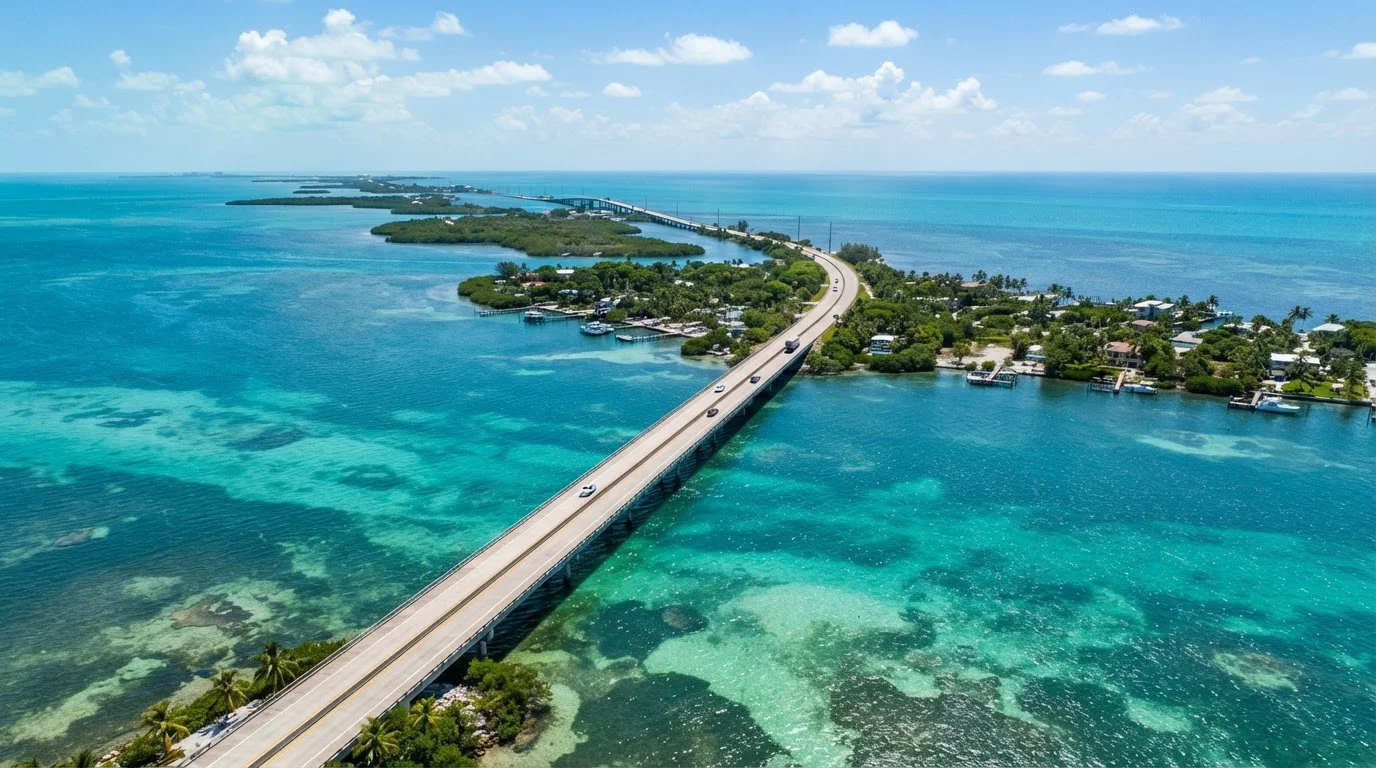
Photo credit: ExplorerGrid.com | Endless Grid Of Factual Content
In this article
The Florida Keys aren't quite what brochures suggest. Common assumptions about crowds, beaches, and driving the Overseas Highway often miss the reality.
Key Takeaways
- The Florida Keys have very few classic sandy beaches; the coastline is mostly rocky limestone and seagrass.
- Driving the Overseas Highway takes significantly longer than GPS estimates due to a single two-lane road.
- Key West is just one stop — the Upper and Middle Keys offer distinct, quieter experiences worth planning around.
- Hurricane season runs June through November and meaningfully affects conditions, pricing, and business hours.
- Snorkeling and diving, not sunbathing, are the Keys' standout activities for most visitors.
The Beach Expectation Gap
Florida conjures images of wide, powdery white sand beaches — and visitors routinely arrive in the Keys expecting more of the same. The reality is strikingly different. The Keys sit atop ancient coral reef formations, and most shorelines are rocky limestone, mangrove, or covered in seagrass flats. Natural sandy beaches are rare, and the ones that exist tend to be small and crowded.
This isn't a flaw — it's ecology. That seagrass is what supports the marine life that makes snorkeling and diving in the Keys genuinely world-class. Florida's Gulf Coast destinations like Clearwater or Pensacola are better matches if sprawling sand is the priority. The Keys reward visitors who come for the water in it, not the sand beside it.
Myth
The Florida Keys have beautiful sandy beaches everywhere, just like the rest of Florida.
Fact
Most Keys shorelines are rocky limestone or mangrove; natural sandy beaches are rare and small.
The Keys formed on top of ancient coral reef systems, not sand deposits. While some artificial or imported sand beaches exist at certain resorts and parks, the natural coastline is primarily limestone, mangrove fringe, and seagrass flats. Visitors expecting miles of sand are often surprised — but the tradeoff is exceptional snorkeling directly from shore in many spots.
Myth
You can easily drive to Key West and back in a single day from Miami.
Fact
The round trip alone is roughly six or more hours of driving — not accounting for stops or traffic slowdowns.
US-1 is a two-lane highway for most of its length through the Keys, with limited passing opportunities and frequent tourist traffic. Add in the draw of roadside stops, fuel breaks, and the inevitable slowdowns near popular towns, and a comfortable day-trip becomes a rushed, exhausting sprint. Most travel advisors recommend at least two nights minimum to experience more than just Key West.
Myth
The Keys are a party destination best suited to spring breakers and Duval Street bar-hoppers.
Fact
The majority of the Keys are quiet, nature-focused, and popular with families, divers, and anglers.
Key West's Duval Street nightlife is real and well-documented, but it represents one small corner of a 125-mile island chain. Islamorada is known as the "sport fishing capital of the world." John Pennekamp Coral Reef State Park in Key Largo draws serious divers and snorkelers. The tone across most of the Keys is relaxed and outdoors-oriented — not rowdy.
Myth
Visiting in summer saves money without meaningful downsides.
Fact
Summer in the Keys brings peak humidity, storm risk, and some business closures alongside lower prices.
July and August are the Keys' hottest and most humid months, and they fall squarely within Atlantic hurricane season. While accommodations are cheaper, some smaller operators close or reduce hours. Afternoon thunderstorms are common. For travelers who can be flexible, late April, May, or November often offer a better balance of value and conditions.
Myth
Snorkeling in the Keys is the same as anywhere else in Florida.
Fact
The Florida Keys National Marine Sanctuary contains the only living coral barrier reef in the continental US.
The reef system off the Keys is genuinely distinct — it's the third-largest coral barrier reef in the world and the only one of its kind in the contiguous United States. That makes snorkeling and diving here a different category of experience compared to, say, Gulf-side Florida beaches. Visibility, marine biodiversity, and reef access are significantly more substantial than what most Florida coastal areas offer.
The Overseas Highway Reality Check
The Overseas Highway — US-1 from Florida City to Key West — is genuinely one of America's most scenic drives. But the romanticized version skips the part where it's a single two-lane road for most of its 113-mile length, with no passing lanes, frequent traffic slowdowns, and speed limits rarely exceeding 45 mph. What GPS labels a two-hour drive often runs three hours or more during peak season.
Visitors also underestimate the psychological commitment: there's essentially one way in and one way out. Getting gas, supplies, or medical care requires careful planning, especially south of Marathon. Smart travelers treat the drive as part of the experience rather than an inconvenience to rush through — stopping at pull-offs, fishing bridges, and local seafood shacks along the way. Think of trip logistics the way you would for a national park journey. Our guide on what first-timers overlook on US park trips covers similar themes around remote-road planning.
Key West Is Not 'The Keys'
A significant share of Keys visitors book flights into Key West, spend their entire trip there, and leave believing they've seen the Florida Keys. Key West is vibrant and worth visiting — but it's also the most crowded, most commercial, and most expensive part of the chain. The Upper Keys (Islamorada, Key Largo) offer world-class sportfishing, coral reef snorkeling, and a markedly quieter pace. The Middle Keys around Marathon sit closer to the Seven Mile Bridge, one of the most photogenic spots in the entire region.
Spreading an itinerary across multiple keys — rather than anchoring entirely in Key West — is how most experienced Keys travelers say they finally understood the appeal. Comparing notes with off-season coastal destination guides is useful here too: the principle of looking beyond the obvious anchor city almost always pays off.
~125 miles
Length of the Florida Keys island chain
The chain stretches from Key Largo to Key West, connected by 42 bridges along the Overseas Highway.
3rd largest
Coral barrier reef in the world
The Florida Reef Tract, protected within the Florida Keys National Marine Sanctuary, is the only living coral barrier reef in the continental US.
June–Nov
Atlantic hurricane season window
The National Hurricane Center defines the official Atlantic hurricane season as June 1 through November 30 each year.
Timing, Weather, and What 'Off-Season' Actually Means
Hurricane season in the Keys runs June through November — which overlaps with what many budget travelers call the "cheap season." Lower prices and fewer crowds are real, but so are the risks: sudden tropical storms, some business closures, and genuinely uncomfortable heat and humidity from July through September. Early November and late April to May are widely regarded among seasoned Keys visitors as the sweet spots — mild weather, manageable crowds, and more predictable conditions.
Visitors should also know that "winter" in the Keys means excellent diving visibility, drier air, and temperatures in the 70s — which is peak season for good reason. It's similar logic to what makes planning any coastal US trip nuanced, as explored in resources covering travel planning myths more broadly. Always verify current conditions and any hurricane advisories through official sources like the National Hurricane Center before traveling.

Author
Travel & Trips Editorial Team
Travel & Trips Editorial Team is the collective byline for our editorial team and contributor network. Articles published under this byline or an editorial pen name are researched, written, and reviewed according to our editorial standards for clarity, consistency, and independence before publication.
View all articles →