
Low-Maintenance Ground Covers That Can Replace Struggling Lawn Areas
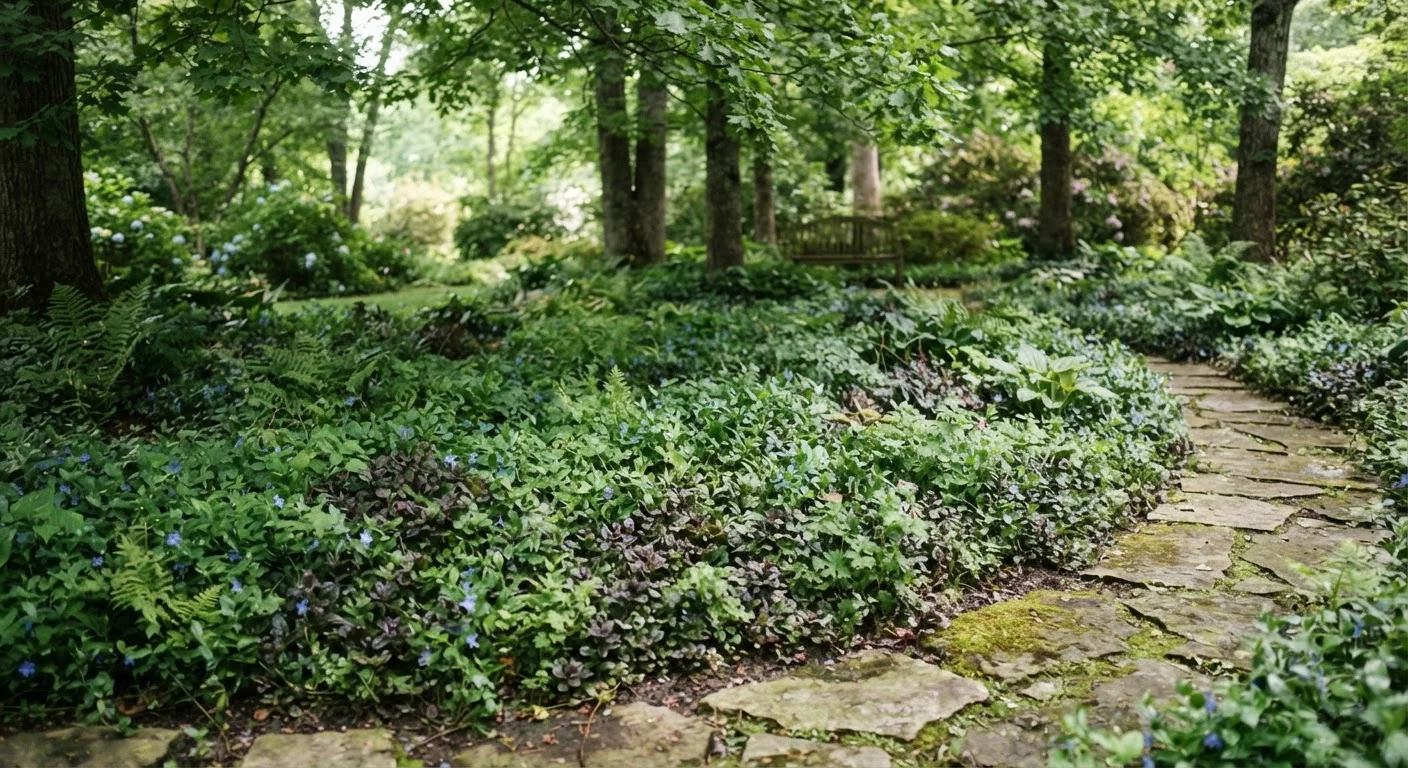
Photo credit: ExplorerGrid.com | Endless Grid Of Factual Content
From creeping thyme to clover, explore ground covers suited to shady, dry, or high-traffic spots where grass persistently underperforms.
Key Takeaways
- Ground covers outperform grass in shady, dry, or compacted spots where turf repeatedly fails.
- Many ground covers require little to no mowing, watering, or fertilizing once established.
- Choosing the right plant depends on sun exposure, foot traffic, climate, and soil conditions.
- Some ground covers like clover and creeping thyme actively improve soil health and support pollinators.
- Proper site prep and weed suppression during establishment are key to long-term success.
When Grass Just Won't Cooperate
If you've overseeded the same shady corner three years running or watched turf turn to dust under a dry slope, the problem likely isn't your technique — it's the plant. Turfgrass thrives in specific conditions: full sun, consistent moisture, and soil that isn't heavily compacted or root-choked. When those conditions are absent, a low-maintenance ground cover is often a more practical and attractive long-term solution.
Ground covers are plants — typically spreading perennials, creeping shrubs, or mat-forming herbs — that grow horizontally to blanket the soil surface. They suppress weeds, reduce erosion, and in many cases need far less water and care than a conventional lawn. The key is matching the right plant to your site's actual conditions rather than forcing a one-size-fits-all solution. If you're also rethinking how your planting areas are structured, our guide on raised bed vs. in-ground gardening covers how different setups affect soil control and maintenance.
Below are seven proven ground covers suited to the problem spots most US homeowners encounter, along with practical guidance on where each performs best.
Creeping Thyme
Best for: Sunny, dry, or rocky areas; light foot traffic paths and stepping-stone gaps.
Creeping thyme (Thymus serpyllum and related species) is one of the most versatile low-maintenance ground covers available to US gardeners. It spreads into a dense, fragrant mat that rarely exceeds 3 inches in height, produces small purple or pink flowers that attract pollinators in summer, and tolerates drought, poor soil, and light foot traffic remarkably well. It requires essentially no supplemental watering once established and never needs mowing. Creeping thyme performs best in USDA zones 4–9 and thrives in full sun with well-drained soil — the same conditions that make turf difficult to sustain on slopes or gravel-topped areas.
Creeping thyme tolerates drought, poor soil, and foot traffic while attracting pollinators all summer.
White Clover
Best for: Full sun to partial shade; moderate foot traffic; nitrogen-depleted soils.
White clover (Trifolium repens) has made a major comeback as a lawn alternative and mix-in, and for good reason. It fixes atmospheric nitrogen through root nodules, meaning it actively feeds the surrounding soil without fertilizer inputs. It stays low — around 6 inches untrimmed — tolerates mowing if you prefer a neater look, and greens up earlier in spring and later into fall than most turf species. Clover handles light drought reasonably well and is attractive to bees. It does self-seed vigorously, so if spread into adjacent beds is a concern, simple edging or mowing around borders will keep it in check.
Clover fixes its own nitrogen from the air, improving soil without any fertilizer inputs.
Pachysandra
Best for: Dense shade under trees; root-choked soil where little else survives.
Japanese pachysandra (Pachysandra terminalis) is the classic solution for heavily shaded areas — the dry, root-dense zones beneath mature trees where grass reliably dies out. It grows 6–12 inches tall, spreads via underground runners to form a tidy evergreen carpet, and once established, crowds out most weeds effectively. It prefers acidic, well-drained soil and performs best in zones 4–8. One note: pachysandra can be slow to fill in during its first season or two, so temporary mulch coverage and patience are important during establishment. It is not suited to sunny or hot, dry sites.
Pachysandra creates a weed-suppressing evergreen carpet in deep shade where turf has no chance.
Creeping Jenny
Best for: Moist, partly shaded areas; slopes prone to erosion; areas near water features.
Creeping Jenny (Lysimachia nummularia) produces bright chartreuse or golden foliage on low, trailing stems that spread quickly to cover bare ground. It tolerates wet conditions that would rot out most turf species, making it particularly useful near downspouts, rain garden edges, or low-lying spots that stay consistently damp. It can handle partial to full shade, though foliage color tends to be more vivid with some sun exposure. Creeping Jenny is a vigorous spreader — in some regions it is considered invasive outside of managed garden settings, so check your local extension office guidance before planting near natural areas or waterways.
Creeping Jenny thrives in wet, shaded spots that would defeat most conventional lawn grasses.
Creeping Phlox
Best for: Sunny slopes, rock gardens, and dry embankments.
Creeping phlox (Phlox subulata) earns its keep with a spectacular spring bloom — cascades of pink, purple, white, or lavender flowers — followed by dense, needle-like evergreen foliage that suppresses weeds and holds soil on steep slopes. It grows only 4–6 inches tall, spreads steadily without becoming invasive, and requires little water or fertilizer after its first season. Full sun and good drainage are non-negotiable; in heavy clay or shaded spots, it underperforms. Hardy in zones 3–9, it's a reliable choice across most of the continental US where slopes make mowing hazardous or impractical.
Creeping phlox delivers a spectacular spring bloom while holding steep, dry slopes securely in place.
Ajuga (Bugleweed)
Best for: Partial to full shade; moist, fertile soil; transitional areas between lawn and woodland edges.
Ajuga (Ajuga reptans) spreads via stolons to form a low mat of attractive, often bronze- or burgundy-tinted foliage with upright spikes of blue-purple flowers in spring. It tolerates shade well, makes a striking contrast plant, and is reasonably tolerant of foot traffic for a broadleaf ground cover. Ajuga does spread assertively, which means it fills bare areas quickly but may also creep into adjacent lawn zones — periodic edging keeps it contained. It can be susceptible to crown rot in poorly drained or heavily compacted soil, so ensure adequate drainage before planting.
Ajuga spreads quickly in shade, offering attractive foliage and spring flowers with minimal care required.
Sedum (Stonecrop)
Best for: Full sun; very dry, poor, or rocky soil; low-water landscapes.
Low-growing sedum varieties — such as Sedum acre (goldmoss sedum) or Sedum spurium (two-row stonecrop) — are among the most drought-tolerant ground covers available. Their succulent leaves store water, allowing them to persist through dry spells that would kill conventional turf. They produce cheerful yellow or pink flowers in summer, stay under 6 inches tall, and thrive in conditions most plants find inhospitable: thin topsoil, gravel, south-facing slopes, and reflected heat from pavement. Sedum is an excellent fit for the growing number of homeowners pursuing water-wise landscaping without sacrificing visual appeal.
Sedum's succulent leaves store water, making it nearly indestructible in hot, dry, rocky conditions.
Getting Ground Covers Established Successfully
The biggest mistake homeowners make with ground covers is skipping site preparation. No matter how resilient the plant, starting it in compacted, weed-infested soil puts it at a serious disadvantage. Before planting, remove existing grass and weeds thoroughly — smothering with cardboard and a thick layer of compost is an effective low-chemical approach. Loosen the top few inches of soil, amend if needed, and apply a layer of mulch between young plants to retain moisture and hold back weeds while the ground cover fills in.
Suppress Weeds During the Critical First Season
Ground covers need time to spread and close the canopy — and weeds will exploit every gap in the meantime. After planting, apply 2–3 inches of shredded bark or wood chip mulch between plants to retain moisture and block weed germination. Pull any weeds that emerge by hand before they set seed. By the second season, a well-established ground cover should significantly reduce your weeding workload on its own.
Once established, most of the ground covers listed here require minimal ongoing input. Many are perennials that return year after year, which can meaningfully reduce both effort and cost over time — a dynamic explored further in our article on balancing perennials and annuals. For slopes or dry sites, pairing ground covers with smart water management strategies can make establishment even easier — see our guide to drought-tolerant landscaping for mulching and irrigation techniques that stretch every drop. And don't forget to include your new planting areas in your fall garden prep checklist — a little end-of-season attention keeps ground covers healthy through winter and ready to spread come spring.

Author
Home & Garden Editorial Team
Home & Garden Editorial Team is the collective byline for our editorial team and contributor network. Articles published under this byline or an editorial pen name are researched, written, and reviewed according to our editorial standards for clarity, consistency, and independence before publication.
View all articles →